He used to protect quarterbacks. Now it’s clients for Krpalek
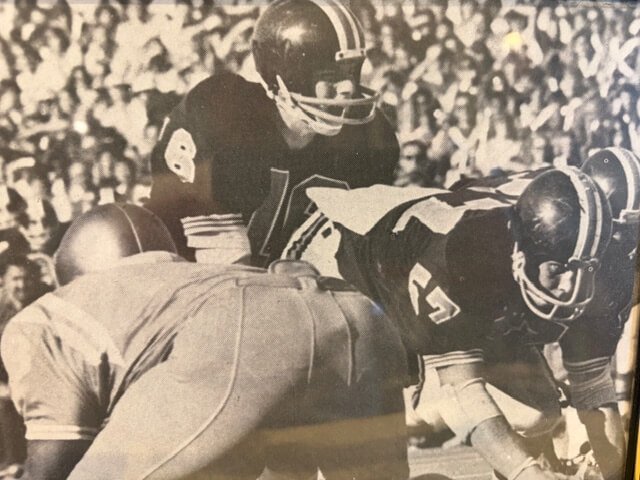
Greg Krpalek (57) prepares to snap the ball to quarterback Scott Spiegelberg for Oregon State in a game against UCLA in 1972 (courtesy John Eggers)
For five decades, Greg Krpalek has taken care of his clients’ needs with Krpalek Financial Services of Albany.
No surprise there. As an All-Coast center at Oregon State under Dee Andros, Krpalek was a master at taking care of his teammates — especially the quarterbacks.
“Not only was he a great center as far as the physicality, but he was a great leader,” says Steve Gervais, one of those quarterbacks. “He owned that (offensive) front. Greg was only a sophomore my freshman year, but he was the guy who made me feel at ease. He was reassuring and welcoming and made me feel a part of things in my first year.”
Krpalek was a three-year starter from 1972-74, a 6-5, 250-pound behemoth (in those days) who was a captain of the Beavers as a senior. They went 2-9, 2-9 and 3-8 during his three seasons, but were Northwest champions in ’74, beating Oregon, Washington and Washington State. Krpalek and the team’s other captain, Jerry Hackenbruck, organized a 50-year reunion in 2024 in which 38 players returned to be together and relive memories on a football weekend in Corvallis. You can read the story here.
“I wish we would have won more games, but I cherish those years,” says Krpalek, 72, who is a sponsor of kerryeggers.com. “I made lifelong friends and had some great experiences.”
Krpalek was an almost hometown kid. He grew up 10 miles from Corvallis in Albany. His cousin, Bill Stellmacher, had been a starting offensive tackle for Oregon State’s 1965 Rose Bowl team.
“I had wanted to be a Beaver since I was six,” Greg says.
He was one of five children of John and Edith Krpalek. John, a World War II Army veteran who was stationed in The Philippines, worked for Simpson’s Timber Company for 30 years. He died of coronary heart disease at 56 during Greg’s senior year at Albany High in 1971.
“Dad worked for them for all those years and had put eight cents of every dollar into a pension fund,” Greg says. “After he died, Mom got zero of that because you had to be 65 to collect. In 1974, major legislation came about that changed that point. Had it been in place before, Mom would have gotten a pension. All she got was a $10,000 life insurance policy.”
Edith was a registered nurse at Albany General Hospital and had to keep working.
“My older sister Judy was going to nursing school and I was getting ready to go to college,” Greg says. “Mom wanted to make sure the three younger kids were taken care of. She was diabetic and had a number of strokes in her last years. She shouldn’t have been working, but she had to.”
Edith Krpalek died in 1979 when Greg was 26. She was 58.
As a senior at Albany High, Krpalek was a 6-5, 185-pound defensive tackle, a second-team All-Valley League selection in a season when state champion Corvallis dominated the all-league teams. Before the North-South Shrine All-Star Game in August, he had a scholarship offer from Idaho but says he “was probably headed to Mount Hood,” which had an excellent community college program.
Krpalek played well in the Shrine Game, and Oregon State was interested. Corvallis High coach Chuck Solberg, who was the South’s head coach in the Shrine Game, had given Krpalek a strong recommendation to OSU assistant Bud Riley, who was recruiting him. Riley was the father of Mike Riley, the Corvallis High quarterback and Shrine teammate of Krpalek.
“You need to go after him,” Solberg told the senior Riley of Krpalek. “He has the heart, the desire and the Oregon State blood in him. Don’t pass up on this kid.”
The Beavers had offered only a tuition scholarship to Krpalek. After the Shrine Game, the Albany Democrat-Herald wrote a story that pointed out the Bulldog star was bound for Mount Hood CC.
“Bud called and said, ‘I thought you were coming to Oregon State,’ ” Krpalek says. “I said, ‘Coach, I’d love to, but I just can’t afford it.’ ”
Riley set up a meeting for Krpalek with Andros. Krpalek was a bundle of nerves as he strode into the Gill Coliseum office of “Great Pumpkin.” Dee greeted him with a handshake and a smile, an unlit stogie in his mouth.
“Bud told me your family’s story, Greg,” Andros said. “I want you to be a Beaver starting today. You have a full ride.”
“I stuck my hand out and said, ‘Coach, you will never regret this,’ ” Krpalek says.
Krpalek went home and told his mother the good news. His second stop was at the home of his high school coach, Roger Dasch.
“Are you sure you have this straight?” Dasch said before breaking into a smile. “Well, God bless you. That’s great.”

Krpalek was a two-way starter for the OSU Rooks in 1971, playing center and defensive tackle. The quarterbacks were Scott Spiegelberg and Mike McLaughlin. Spiegelberg, out of Medford High, had been a teammate in the Shrine Game.
“Greg was a big, rugged, wild guy on defense, but he was really cut out to be a center,” says Spiegelberg, now retired and living in Corvallis. “He was so steady, a consistent snapper, the guy who got the huddle going and made sure everybody was listening. He was a take-charge guy. We would get to the huddle and Greg would say, ‘Shut up, let the quarterback make the call,’ and get everybody settled in.”
Oregon State’s varsity center from the 1971 season, Jack Turnbull, had graduated, so the starting spot was open. Krpalek was no longer sinewy. After an offseason dedicated to building his body, Krpalek says he bulked up to 240 pounds.
“I ate a lot of protein,” he says. “Soy powder, a dozen eggs, a pound of bacon — I was doing a lot of that. I knew I had to be a lot bigger than 185 pounds. I worked my fanny off. Weights weren’t a big deal in those days, but I hit it pretty hard. There were probably five of us who were in the weight room all the time during the offseason. Should have been a lot more players in there.”
Krpalek entered spring ball expecting to battle for the starting center position. But offensive line coach Sam Boghosian had moved sophomore Jeff Hart from tackle to center. When Krpalek visited Boghosian’s office before spring drills started, he saw a depth chart that had him listed on the fourth team. He stormed out of Boghosian’s office.
“I am not going to be fourth team,” he told himself. “I am going to be the starter.”
When spring ball began, he was wearing a purple practice jersey. Hart was wearing the orange of the starting group. Krpalek played the first few days with a chip on his shoulder. Hart approached him one day.
“Take it easy, Greg,” Hart said. “This was just practice.”
“Jeff, I am going to be wearing that orange jersey within a week,” Krpalek says.
And he was. Boghosian moved Hart to tackle, a position he would go on to play for seven years in the NFL. But Krpalek was not going to be denied the center spot.
“I wanted that so bad,” he says. “Mentally, physically — I wanted that position, and I wasn’t about to be a fourth-teamer. I was going to be No. 1.”
Krpalek’s baptism as Oregon State’s center as a sophomore was a bit unsettling. Andros used four quarterbacks as starters that season — Spiegelberg, McLaughlin, Gervais and Tom Hickey. The season began with a discouraging 17-8 loss at San Diego State, then a member of the Pacific Coast Athletic Association. The next outing was a 51-6 setback against top-ranked Southern Cal in the LA Coliseum. The Beavers beat only BYU and California and averaged 11.9 points per game. The finale was a 30-3 drubbing by Oregon at Parker Stadium, ending Andros’ eight-game win streak in the Civil War.
“I cried my eyes out after that game,” Krpalek says. “I remember sitting with (offensive tackle) Ken Maurer and saying, ‘We are not going to lose to these guys again.’ ”
The Beavers didn’t, winning 17-14 at Autzen Stadium in 1973 and 35-16 at home in 1974. In the latter game, Oregon jumped to a 10-0 lead in the second quarter. At the time, quarterback Alvin White was 0 for 6 passing. When on second down from the OSU 20-yard line a pass play call came into the huddle from offensive coordinator Jerry Cheek, Krpalek balked.
“Check,” he said, looking at fullback Dick Maurer. “We are not running that.”
“Give me the ball,” Maurer shot back.
The play was changed to “Power 52,” a run between Krpalek and guard Mike Kobielsky, “my best buddy,” Krpalek says. Maurer barreled through a big hole for a first down. The Beavers marched 80 yards, all on the ground, for a touchdown. For the game, Maurer carried 24 times for 116 yards and two scores.
“We played smash-mouth football the rest of the game,” Krpalek says. “We dominated them and ran the ball down their throats. We all walked off that field with our heads up. Our last game together at Oregon State. Our careers were done. But we beat the Ducks.”
Krpalek roomed together with Kobielsky and Ken Maurer, Dick’s brother.
“Greg and I were like brothers,” says Ken, retired and living in La Center, Wash. “We played Rook ball and then two years of varsity ball together. Greg was a great guy to hang with. He had a wild streak, but as college kids, we all did things you can’t put in print.”
When the Beavers were recruiting White out of Orange Coast CC in Costa Mesa, Calif., Boghosian employed Krpalek as host of his trip to Corvallis.
“We went out on Saturday night, had a great time, and I had quite the hangover the next day at breakfast,” says White, now living in Reno and working as superintendent/project manager for a construction company. “Greg had a little bit of a crazy streak.”
“He could certainly drink beer with the best of them,” Gervais says with a laugh.
More than that, Krpalek could play football.
“Greg had the size, the strength and the smarts you needed at the center position,” says Dick Maurer, now retired and living in Corvallis. “He was a loyal teammate, and always about the Beavers.”
“Great player, outstanding teammate,” says Hackenbruck, a defensive tackle from Corvallis who shares many similarities with Krpalek, including a birthday — August 15.
“Neither of us were highly recruited,” says Hackenbruck, now retired and living in Tualatin. “For both of us local kids, Oregon State was our first choice. We both lost a parent at a young age. He got a scholarship before he started; I got one my sophomore year. We became great friends, and still are.”
“We have so much in common, it’s incredible,” Krpalek says.
“Greg realized every ounce of his potential,” Hackenbruck says. “He worked hard at being the best he could be, and he played all out on every play. I believe that’s a similarity between us, too. He never rested. He was going full speed all the time. He was a relentless blocker. My sophomore year, I was on the defensive scout team going against him a lot, and he was hard to get away from.”
“Greg had a great first step,” Spiegelberg says. “He was a hell of a run-blocker and he was a hell of a teammate. Was he the greatest athlete on the field? Probably not. But what he lacked there, he made up for it in heart.”
“He had the size, the desire, the competitiveness,” Ken Maurer says. “As you went around campus, he would seem to know everybody — still does. We didn’t win many games, but we were a tight group. We all worked together, we played together, we partied together.”
Gervais played some quarterback for the Beavers in all three of Krpalek’s varsity seasons. Gervais got to know the big guy in the middle as well as anybody.
“Greg was a tremendous player, an underrated player,” says Gervais, now retired from coaching and living in Sammamish, Wash., after spending 31 years in high school coaching in the state, winning six state championships. “He was the guy who led our offensive line, and he was motivational. He had fire in his belly. He got after it, and he got his teammates after it. He was very determined and he communicated that well.
He was going to go to whatever extremes necessary to be successful. He carried that with him at all times. He had that expectation of everybody else, too.
“What you loved about Greg, either on the field or out with the guys, he was going to protect you and make sure he took care of his friends. He was a very loyal person, somebody you could count on to be there.”
One of Krpalek’s closest friends is Jim Walker, who was two years behind him at Oregon State. Walker was a reserve guard as a sophomore during Krpalek’s senior year, then, after a redshirt year, became the Beavers’ starting center in 1977 and ’78. Krpalek and Walker roomed together along with Kobielsky and the Maurers for two years at OSU.
“After I moved into the ‘Animal House,’ Greg sort of adopted me,” says Walker, now retired and living in Bridge, Oregon, population 39. “Boy, we could write a book about that.
“Greg was a great teammate, extremely competitive, strong as a bull and physical, and an intelligent player. When you get elected as captain by your teammates, it shows what kind of a leader you are. He had all the attributes.
“We have been great friends for 50 years. He has been very successful in business but is humble about it. He is like a brother to me. I am honored and privileged to call him my teammate, friend, and brother. I love the guy with all my heart.”
White held Krpalek in the highest regard.
“Greg was an All-American in my book,” says White, who wound up playing in a potpourri of pro leagues, including the Canadian Football League, the World Football League, the U.S. Football League and the American Football Association from 1975-85. “He was a determined and dedicated dude. He was really committed to the game and to Beaver Nation, and he still is. He loves football and the Beavers. We are still good buddies. We see each other all the time.”
White recalls a game at Southern Methodist in the second year of his two-year Oregon State career. The Mustangs’ defense featured an All-America lineman named Louie Kelcher.
“Greg and (backup center) Dan Welsh are in their hotel room and they call Louie’s house,” White says. “They told his wife, ‘We are going to kick his ass.’ The next day, Louie had the best of both of them.”
Greg adds to the tale: “We knew SMU’s married players stayed at their homes instead of the hotel with the rest of their players. Dan and I found Louie’s number in the phone book. I called his number at about 11:30 p.m. His wife woke up and took the call. She said, ‘Who is this?’ I said, ‘Greg Krpalek, and I need to talk to Louie.’ He came to the phone and said, ‘Who is this?’ I said, ‘Louie, I’m going to eat your lunch tomorrow.’ The next day, when I broke the huddle (on OSU’s first possession) Louie came up to me and said, ‘You SOB.’ We held him to a couple of unassisted tackles and six assisted tackles (in a 37-30 SMU victory), but he was a monster! It was all in fun.”
Another story: White accompanied Krpalek to his Albany home one day.
“His neighbor had this big old bull, with big balls hanging out,” White says. “I was a quarterback and a (baseball) pitcher. Greg asks, ‘Do you think you can hit that cow’s nuts?’ And yeah, I did, with an apple. From Greg’s yard, I got him two strikes, and that bull was pissed.”
Another story: OSU rally boy Rick Coutin lived in the same apartment complex in Corvallis. Coutin had heard the tale about White’s arm being so strong, he could throw a football 60 yards on one knee.
“Rick made me a bet one day.” White says. “He said, ‘I bet I can throw a football (standing up) farther than you can on one knee.’ I said, ‘Sure, let’s go for it.’ He throws the ball with a running start about 45 yards. I won two New York steaks from him that day.”
Krpalek wound up starting all 33 games he played for Oregon State. When teammates selected Greg and Hackenbruck as co-captains prior to their senior season in 1974, “it was the biggest honor of my career,” Krpalek says.
There was another big one, though. During the UCLA game that season, the city of Albany held a “Greg Krpalek Day” — ironically, in Corvallis.
“Half of Albany came over that day,” he says. “I was on the cover of the game program, and afterward I was presented a certificate by my high school. It was quite an honor.”
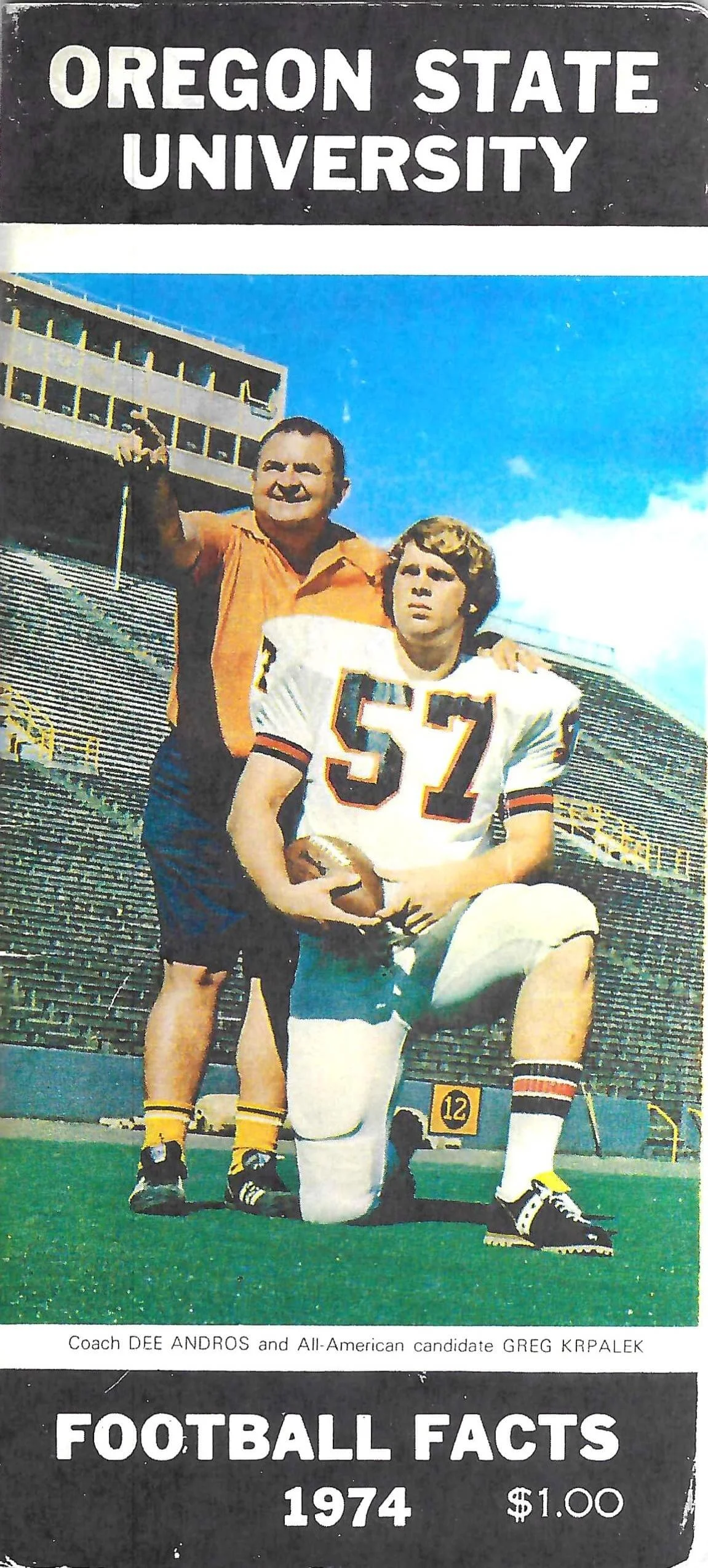
Coach Dee Andros points out a UFO in the sky to Greg Krpalek, a photo used on the Beavers’ 1974 press guide
Krpalek also considered it an honor to play for Andros.
“He was like the dad I didn’t have anymore,” Krpalek says. “He stepped into that role after Dad died. I thought the world of Coach Dee. I respected him so much. Coach Boghosian, too. It took awhile to gain (Boghosian’s) respect. The first two years, he called me ‘Krpalek.’ My senior year, it was ‘Greg.’ I knew then that he had accepted me. Coach Dee, you would go to war with him. We all loved him.”
Krpalek looks back fondly at his time with the Oregon State football program.
“I would do it all over again,” he says. “I loved the Beaver fans. We represented the state of Oregon. I took a lot of pride in that. During my years, our team had a special camaraderie. I have friends for life. That’s one thing about this day and age with NIL and the (transfer) portal. With players leaving every year for a new school, you are never going to have that kind of closeness.”
•
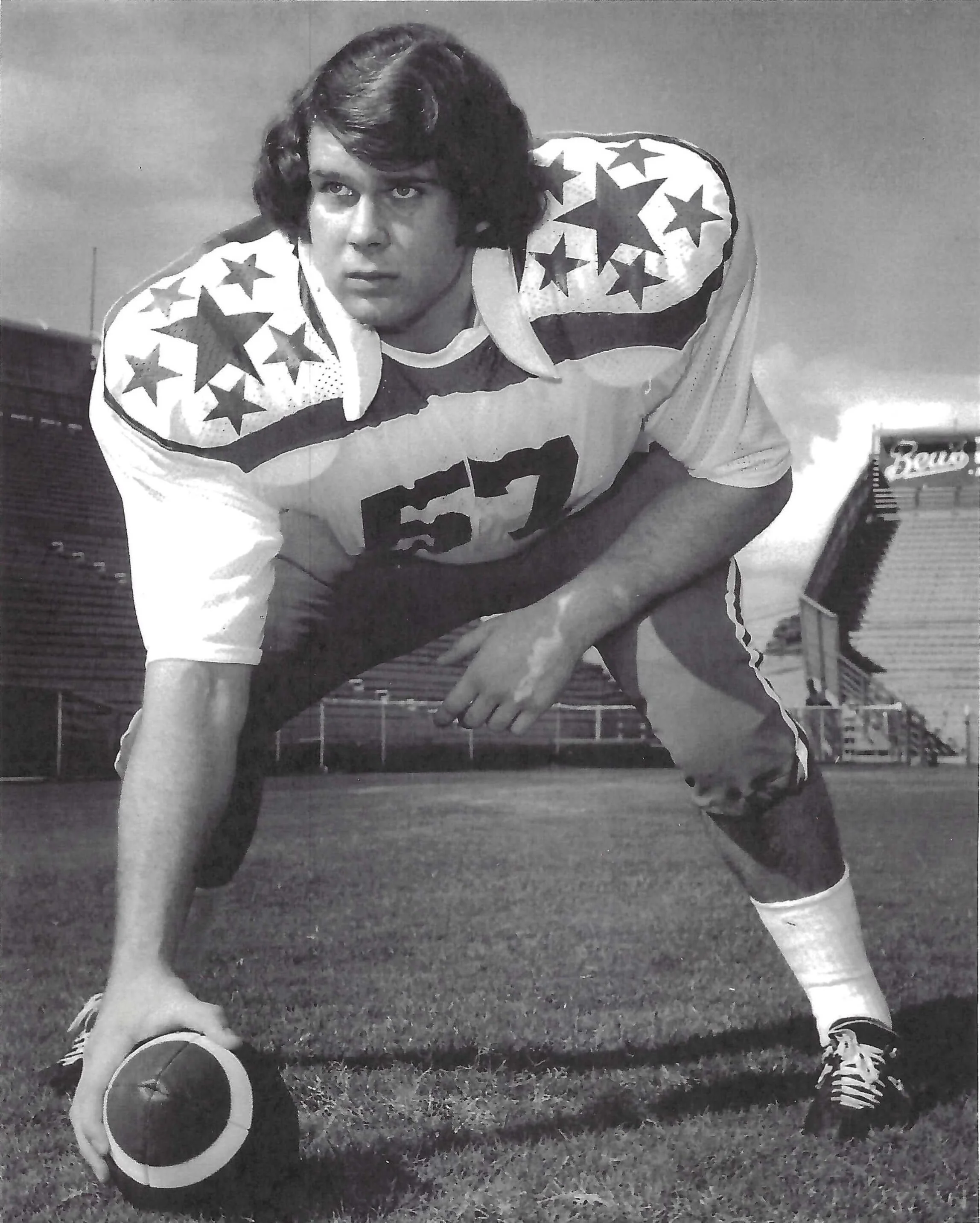
Krpalek played for the West team in the 1975 Hula Bowl at Honolulu (courtesy Greg Krpalek)
After earning first-team All-Coast honors and participating in the Hula Bowl, Krpalek was chosen by Dallas in the 11th round of the 1975 draft. He played in three exhibition games for the Cowboys before being cut the last week of the preseason. Krpalek carries a special memory of the first game, a matchup with the Los Angeles Rams. He entered the contest in the second quarter, with Roger Staubach quarterbacking the Cowboys.
“I get to the line of scrimmage and it’s Merlin Olsen across from me — surreal,” Krpalek says. “They have a linebacker behind him — Jack Youngblood. On the first play, he was crashing and had his arm out to get Staubach; I popped him and he went flying. He gets up and charges me, and a bunch of players jump in front to stop it.
“The next play we break the huddle and get up to the line, and I look over and Jack is eyeing me. He is going to take me out. Bruce Walton (Bill’s older brother) is our left guard and he says, ‘Don’t worry, I’ll take care of it.’ Youngblood runs at me and Bruce pops him, and he goes flying again.”
The next year, Krpalek got a free-agent tryout with the New Orleans Saints. “They said they would bring in only one new center and I would have a good chance at making it,” he says.
Krpalek lived and trained in New Orleans for a couple of months until training camp started in Vero Beach, Fla.
“There were about 180 players in camp,” Krpalek says, “including 14 centers.”
He played in one exhibition game with the Saints before being released.
Krpalek returned to Albany, got his insurance license and began work in the insurance/financial advising business. There was one more bite at the football apple, though. In 1979, he received a call from Dick Corrick, who served as director of player personnel for the Green Bay Packers from 1977-87. Corrick, who had played for Tommy Prothro on Oregon State’s 1957 Rose Bowl team, was looking for a long snapper. Among the calls Corrick made was to long-time Beaver trainer Bill “Rope Sole” Robertson, who knew Krpalek was still working out and recommended him. Greg wound up attending a Packers mini-camp and says he impressed coach Bill Curry, who extended an offer to participate in the team’s summer training camp.
“I thought I had a great shot,” Krpalek says. “I was running second-team center. I played in three preseason games. But they made a trade near the end of camp and cut me to make room for (the acquired player). It was disappointing, but after that I had (pro football) completely out of my system and I got serious in my business.”
Fifty years after it began, Krpalek remains a fixture in the investment world. He services 250 clients, most of them retirees and business people. Krpalek Financial Services is committed to five keys to a client’s financial success: Protection as well as estate, retirement, investment and tax planning. “I am heavy into the investment insurance and tax planning,” Greg says.
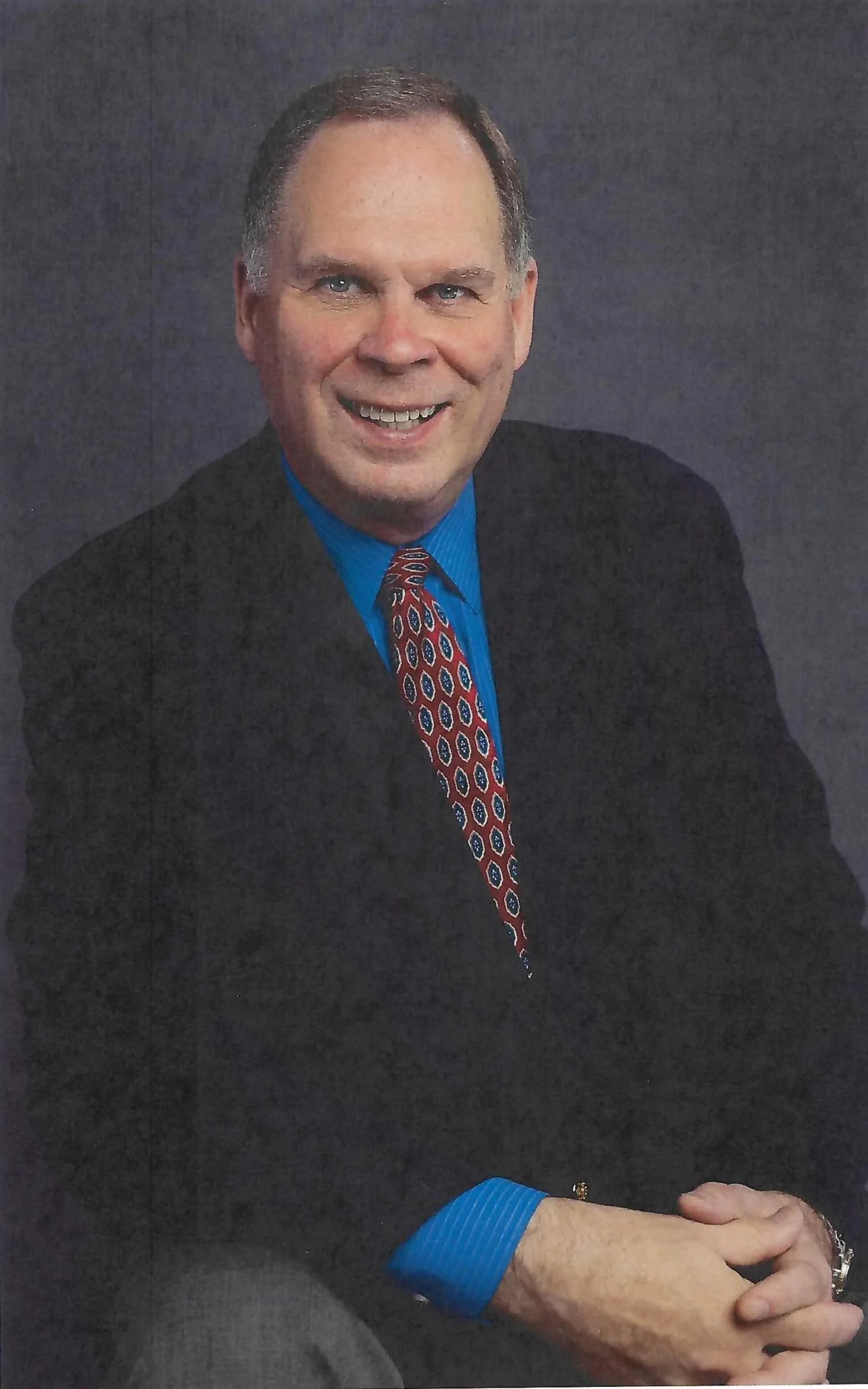
Krpalek is in his 50th year servicing clients with financial advice (courtesy Greg Krpalek)
Krpalek Financial Services is not affiliated with a corporate giant.
“I never wanted to be an employee of a big wirehouse or of the banks,” he says. “I am with LPL Financial, the nation’s largest independent. They have 30,000 advisors and offer everything you can imagine. I have always been on the independent channel.”
At an age when most of his friends are in retirement, Krpalek is still working.
“I love helping people,” he says. “When I sit down with somebody, I am looking at the whole picture. I will give them all the information they need and the options, but they need to be the ones to make the decisions. It is about being able to improve their current situation, and in most cases, I can do that dramatically.”
His friends believe in him. Among his clients are Spiegelberg, White, Hackenbruck, Walker and the Maurers.
“Greg is my go-to guy for investments,” Hackenbruck says.
Krpalek is a family guy. He has two step-children with his wife of 34 years, Mary, four grandchildren and one great-granddaughter.
“Mary and Greg are so good for each other,” White says. “They have this loving spirit, the two of them. I’m blessed to know them.”
“Greg is my daughter Annie’s godfather,” Spiegelberg says. “I am so glad he found Mary. She is the sweetest woman ever. They are such a great match.”
► ◄
Readers: what are your thoughts? I would love to hear them in the comments below. On the comments entry screen, only your name is required, your email address and website are optional, and may be left blank.
Follow me on BlueSky.
Follow me on X (formerly Twitter).
Like me on Facebook.
Find me on Instagram.
