Terrell Brandon: A class act on and off the court
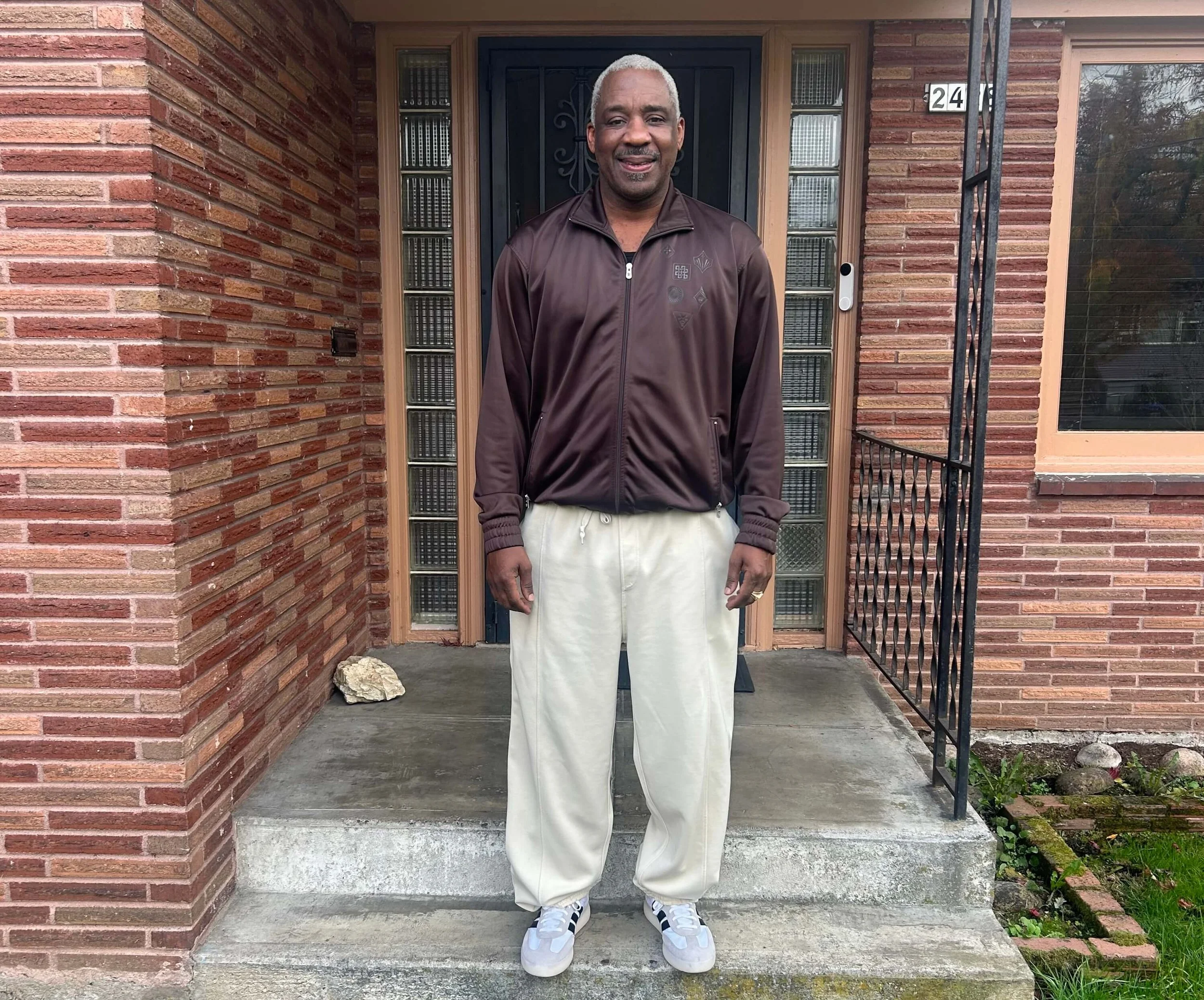
All you need to know about Terrell Brandon comes with the modest three-bedroom home he lives in on Portland’s North Emerson Street. He is loyal to the core to the City of Roses.
“Lived here for 35 years,” says Brandon, the former NBA standout and perhaps the greatest basketball player to come out of the PIL. “I love Portland. I always say, we’re all going to die one day. I hope to God whatever happens, it happens here. I love the neighborhood.”
Also, Brandon relates with a smile, “I don’t have a lot of steps in this house, which is good for my knees.”
Remnants of an 11-year NBA career left the ex-Grant High and University of Oregon star with four knee surgeries — three to his left one, including a reconstruction.
The 5-10 Brandon is no longer leaping tall buildings with his 36-inch jump reach. He is left to walking to help stay in shape.
“I never thought in my early years that walking would be exercise, but it is now,” he says. “I try to walk three times a week, three or four miles at a time. I time myself. I’m competitive within myself. I don’t take my time. I make sure when I am done, I have a little lather going.”
Brandon is 55 now — “I’m at the speed limit,” he cracks — and weighs 195 pounds, about 15 over his playing weight in the NBA. He looks fit and moves around easily.
“My body is feeling well,” he offers. “It’s nice to be able to shake hands and not cringe because my fingers are dislocated or sprained. I wake up occasionally, and have to pop my knee three or four times to get out of bed, but I feel healthy and pretty fortunate.”
Brandon’s NBA career ended prematurely in 2002 at age 31 due to knee issues. After sitting out the 2002-03 season, Brandon was dealt in a four-team trade from Minnesota to Atlanta. The Hawks gave him a physical.
“The doctor told me, ‘I’ve got good news and better news,’ ” Brandon says, his knee cracking as we talk. “I’m thinking that, with more rehab, I am going to be able to play again. Then he said, ‘We won’t have to amputate your leg.’ I said, ‘What you talking about?’ No one had mentioned that possibility. He said, ‘We have your X-rays through the years. How much basketball did you play in the parks? You basketball guys don’t know that you’re tearing your knees up.’ ”
Before Brandon had digested the “good news,” the doctor delivered “the other good news.”
“You won’t be playing (NBA basketball) anymore,” he said. “Congratulations on a great career.”
“That was it,” Brandon says. “It was devastating. I had all this time in the rest of my life. I thought I would play until I was 40.”
As a teenager, Terrell honed his game on the concrete courts at Unthank and Irving parks. In the end, that kind of pounding eventually led to his undoing.
“But I don’t regret anything,” he says. “I had to play the playgrounds to get to where I wanted to get.”
Today, Brandon’s life is full. He is single — he has never been married — but a father to three children. Trevor, 34, lives in Portland and works for a company that administers financial grants. Terrell Jr., 16, and Ava, 14, live with their mothers in Portland. Terrell Jr. is a junior at De La Salle North Catholic High and participates in basketball and track and field. Ava, a freshman at Jefferson High, is heavily involved in the performing arts program. “She loves to tap dance, she can choreograph, she can sing, she can dance — she can do it all,” Terrell says.
Their father says both get “straight A’s.” He takes them to school in the mornings and picks them up every afternoon. Terrell says he has a “fantastic” relationship with the mothers of all three children.
“The kids live 15 minutes from here,” he says. “I am with them regularly. I love being a dad, especially at this time in my life. It’s a lot of fun. When I was playing in the NBA, I wasn’t around as much for Trevor to experience things he had to go through. Now I am there (for Terrell Jr. and Ava) in a minute, and I love that.”
Brandon no longer owns the barber shop he ran in Northeast Portland for many years, but still operates “Tee Bee Enterprises,” a foundation funded by Brandon together with donations.
“We still do community service, projects such as food drives and Thanksgiving giveaways,” he says.
For about a year and a half, Brandon has hosted a weekly podcast called “Life After Basketball with Terrell Brandon,” with producer David Stephens, a friend of his.
“It’s something I never thought I would do,” Brandon says. “David and I were talking one day. We started checking out other podcasts. I have a lot of local contacts. That’s what I wanted to focus on.”
Terrell has covered a variety of subjects with a variety of guests. Noted gardener Dee Davis. Saxophone great Mike Phillips. Former Trail Blazer Brian Grant. Charlie Brandon, Terrell’s father, assistant pastor at Portland’s Walker Temple Church of God in Christ, and several church elders.
“Not much sports,” he says. He makes an exception with me on a recent afternoon in the downstairs recording studio at his house.
“I talk sports with you, because that is what both of us do,” he says. “Doing this has been a great blessing for me. It’s a lot of fun, entertaining and educational.”

The Dean of Portland Sports is now on BlueSky.
Terrell and sister Tracy were raised by Charlie and Charlotte Brandon in a conservative, Christian household. Charlotte was full of life, a whirlwind of activity and founder and president of the Mothers of Professional Basketball Players. It was in that capacity that I met her; she was a delightful woman. For a story on wrote on the Brandons in 2003, then-commissioner David Stern told me this:
“Charlotte has been an extraordinary leader and an inspirational force to the organization and to the NBA. There is no member of the NBA family that has contributed more than the moms’ association, and in particular, Charlotte. She and her husband have a remarkable set of values, and she understands the much broader picture of life, not just the basketball part.”
Charlotte was also involved in many church and civic activities. She gave the commencement speech one year at Jefferson High and served in executive positions with the National Cancer Society, Red Cross and Planned Parenthood. Charlotte died in 2016.
“It doesn’t feel like she is gone,” Terrell has. “Every time I think about her, I smile. She had a big influence on my life. She taught me about work ethic, how to treat women with respect, to be concerned about my hygiene, to take care of myself.”
Charlie, now 84, worked for many years as a supply supervisor at OHSU and, for more than 40 years, has also done his pastoral work.
“He is doing spectacularly,” Terrell says. “He got remarried five years ago. He is happy and healthy. He is the one who taught me how to be a man, how to be responsible, to carry myself with dignity, to treat people well.”
Terrell played in an era in which the PIL was a hotbed of guard talent with players such as Tony Ross, Keith Smith, Charles McKinney, Pat Strickland, Damon Stoudamire, Brandon Brooks and Orlando Williams.
I first saw Terrell during his sophomore season at Grant, when as a 5-8, 140-pound guard he was seventh man on a John Stilwell-coached team featuring Ross, Mark West and LaVon Van.
“Coach Stilwell gave me the opportunity,” Brandon says. “That team was so mature. At that time, sophomores didn’t often play varsity at Grant. During tryouts, he blew his whistle and put me in the varsity layup line. I was surprised. LaVon said, ‘Stay here. You’re going to be a varsity guy.’ And we won a (3A) state championship that year.”
Brandon was a starter and a second-team all-state tournament selection as the Generals made it to the championship game again as a junior, losing to Sunset in the finals. Grant went into Brandon’s senior year poised to reclaim the title in a season when the PIL was loaded with good teams.
“We went in ranked No. 1 in the state,” he says. “Wilson was No. 2, Jeff No. 3 and Benson No. 4 or 5.”
Brandon broke his ankle early in the season, and the Generals suffered, finishing fourth in the PIL race behind the other three contenders. Terrell was able to return for the playoffs.
“I was probably 70 to 80 percent (healthy),” he says, “but I didn’t care.”
Grant had to play Lincoln just to get into the sub-tournament. The Generals prevailed, then won at Bend and at Beaverton to make the final eight. They swept through unscathed, claiming their second state title in three years. Terrell was named to the first All-State and All-State Tournament teams. Grant’s three-year record during Brandon’s prep career was 70-9, playing in the best league in the state at the time.
“It was a great way to end my (high school) career,” Brandon says.
Before he left Grant, he had one more athletic event to conquer. Terrell, on an ankle still not 100 percent, won the state triple jump championship with a leap of 47-2 1/4.
► ◄
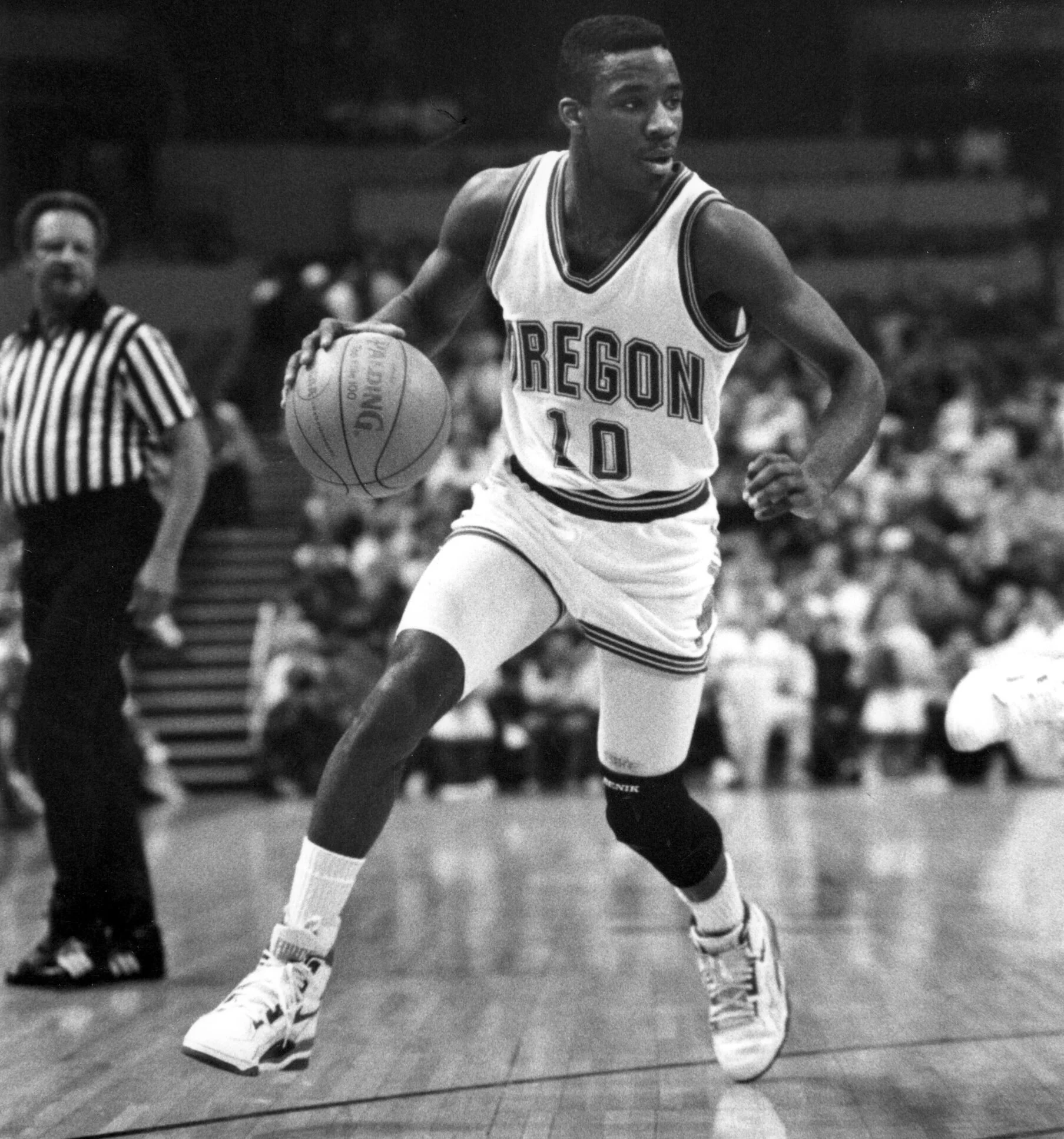
Brandon averaged an Oregon-record 26.6 points and was named Pac-10 Player of the Year in 1990-91 (courtesy Oregon sports communications)
Brandon was destined to play college ball at Oregon. As a youth, he recalls watching TV highlights of such former Duck greats as Stan Love, Ronnie Lee and Greg Ballard.
“I liked the yellow wrist bands with the green numbers they wore,” Terrell says. “I told my Dad, ‘I want to go there.’ He said, ‘You have to work hard, and you might make it.’ ”
Oregon coach Don Monson offered a scholarship. So did Jerry Tarkanian of Nevada-Las Vegas. On his recruiting trip to Vegas, “Tark said he knew Don had me wrapped around his finger,” Terrell says with a smile.
Brandon was a Prop 48 academic casualty and had to sit out his freshman season. He says he had a 3.1 GPA at Grant but failed to pass the SAT. He took it so late in the process, there wasn’t time for a re-take.
“I missed (passing) by 10 points,” Brandon says. “It was embarrassing. I was representing Portland. People were looking forward to watching me play, and I felt like I embarrassed my family, my church, my community, my high school.”
It was a lonely freshman year for Brandon. He couldn’t travel with the Ducks, or even take part in practice sessions.
“At practice, I had to sit 50 feet from the court,” he says. “I couldn’t be a part of team meetings. I couldn’t sit on the bench at home games. I asked Coach Monson, ‘What can I do?’ He said, ‘You can go to school, and you can go to training table. You can eat and you can study.’ ”
Brandon played a few intramural games before the powers-that-be decided he was ineligible for that, too.
“I was scoring so many points,” he says, “they said it was unfair.”
Playing with the likes of Richard Lucas, Keith Reynolds, Kevin Mixon and Jordy Lyden over the next two seasons, Brandon experienced only intermittent team success. As a junior, however, he came through with the greatest individual season in Oregon history. He led the Pac-10 in scoring (26.6 points per game, still a school record) and steals (2.3) and was fifth in assists (5.0) while averaging 39.6 minutes per game. He was honored as conference Player of the Year for the 1990-91 season.
“I had played against (Oregon State’s) Gary Payton the year before,” Brandon says. “Going into my junior year, my dad said, ‘You’re not going to play against anybody as good as Gary.’
“That season, I came out with a bomb. I was ready to play. I looked at everyone as an enemy. We weren’t a good team, though we were working toward that and had some good wins. I wanted (opponents) to go in thinking, ‘We might beat Oregon, but we won’t beat Brandon.’ ”
Terrell enjoyed playing for Monson, an old-school coach who embraced discipline but not usually his players.
“Coach Monson was hard-nosed,” Brandon says. “He treated everybody the same, from the first player to the 12th. If I didn’t practice the way he wanted me to, I would hear about it. He pushed me. He did let me do a few things he wouldn’t let others do. One thing was hugging him. He wasn’t a hugger. I would grab him from behind and he would try to shrug me off. But you know what? By my junior year, he would diagram something and he ended up hugging me.”
► ◄
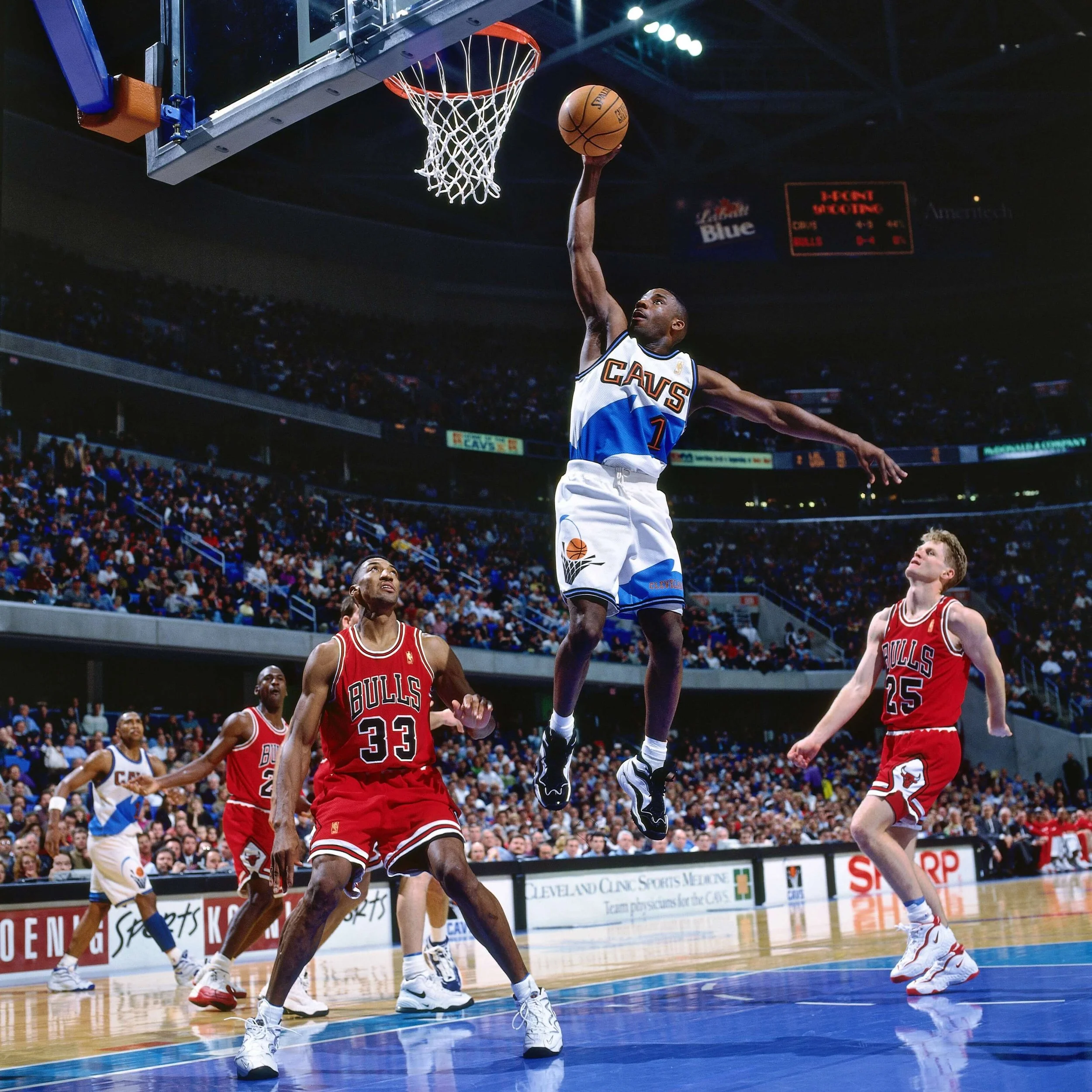
Brandon played the first six of his 11 NBA seasons in Cleveland, making two All-Star Game appearances. Here he is shown using his incredible hops to dunk one over Scottie Pippen (33) and Steve Kerr (25) (courtesy Cleveland Cavaliers)
Brandon was taken by Cleveland with the 11th pick in the 1991 NBA draft. He spent six seasons with the Cavaliers, the most productive stint of his career, making a pair of All-Star Games in 1996 and ’97. His first NBA coach was also his favorite, the great Lenny Wilkens, who died on Nov. 5 at age 88.
“Coach Wilkens was my most inspirational coach,” Brandon says. “He taught me to always go downhill. Go north and south, not east and west. He taught me how to work with the big men. I learned how to deliver the ball differently to each player based on their skills and the nuances involved with that.
“You never heard him use foul language. He rarely raised his voice unless he was talking to a referee. He still commanded respect. I remember the individual meetings, him sitting me down. You didn’t know if you would be in trouble, but he would ask you about your parents. He would say things like, ‘Give your high school coach a call and see how he’s doing.’ He would talk about things other than basketball. Then he would say, ‘OK, take care. See you tomorrow at practice.’ ”
During his time under Wilkens and Mike Fratello in Cleveland, Brandon played with the likes of Mark Price, Larry Nance, Brad Daugherty, Craig Ehlo, Gerald Wilkins, Winston Bennett, Hot Rod Williams and Steve Kerr.
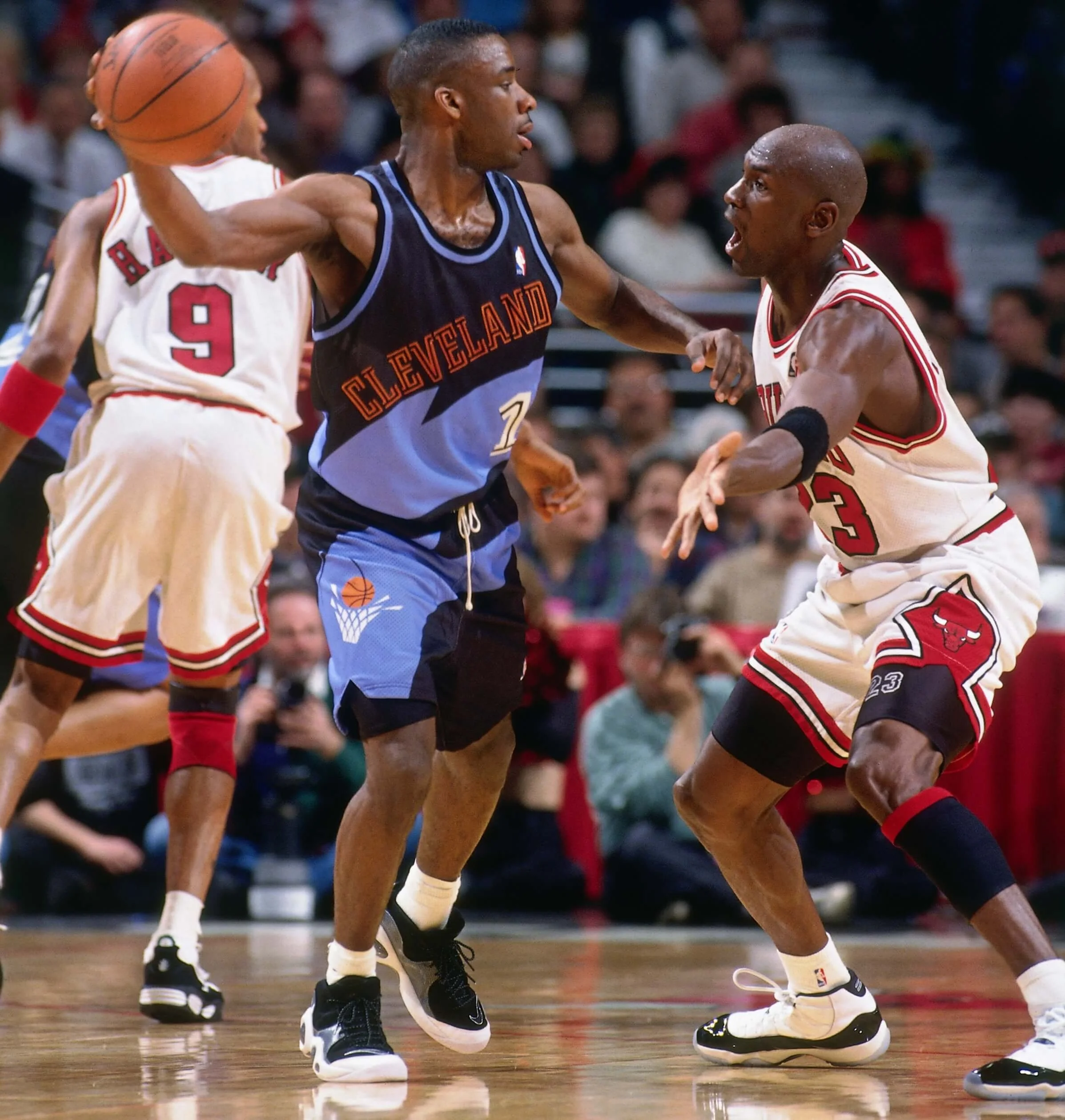
Grant High grad Terrell Brandon, here being guarded by Michael Jordan, ranks with A.C. Green as the most successful Portland natives in NBA history (courtesy Cleveland Cavaliers)
“Nothing but vets,” Brandon says. “They made it easy on me early to be mature. They were grounded. That’s what I needed, to be around some older guys who taught me the ropes, and it fit my personality. Then once I got my opportunity, I made sure to take care of my younger teammates.”
Brandon’s best team in Cleveland was his first one, in 1991-92. The Cavs went 57-25 and reached the Eastern Conference finals, losing in six games to the eventual champion Chicago Bulls. It was the closest Terrell would get to the NBA Finals.
It has been a fulfilling career for Brandon, who has been honored with induction into the PIL Hall of Fame, the Oregon Sports Hall of Fame, the UO Sports Hall of Fame and the Pac-10 Hall of Honor.
In 1997, he was given the NBA Sportsmanship Award, bestowed annually upon the player who “most exemplifies the ideals of sportsmanship on the court with ethical behavior, fair play and integrity.” He joins the likes of David Robinson, Jrue Holiday and Grant Hill as past winners.
“My mother cried on only three awards in my life — the ‘Humanitarian Award’ my senior year in high school, an award I won in church and the NBA Sportsmanship Award,” Terrell says. “She was always most proud that I was trying to be the best person I could be.”
► ◄
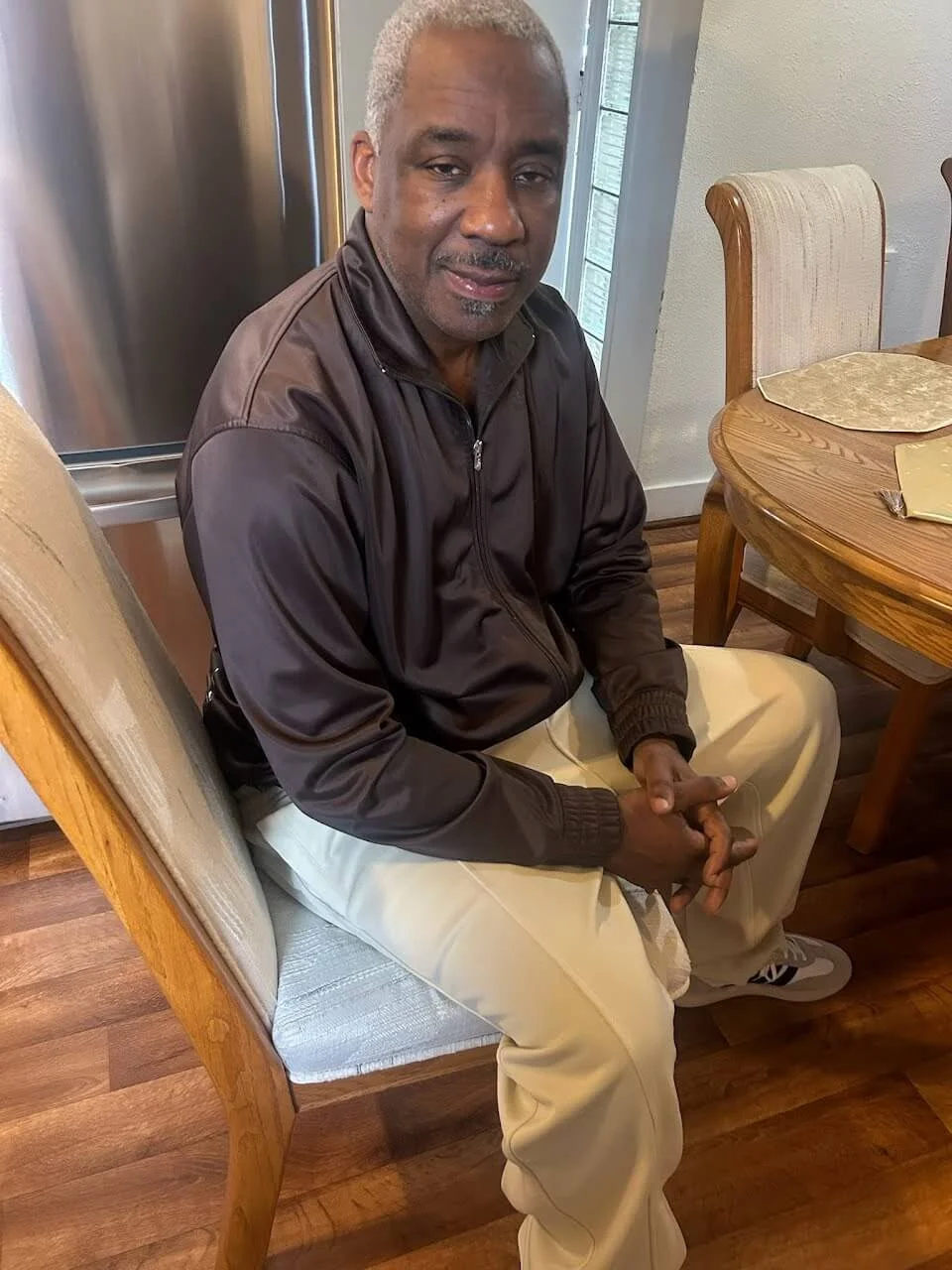
Terrell, who has lived in the same Northeast Portland house for 35 years, is loyal to the city through and through
Religion remains an important part of his life. He still attends church at Walker Temple Church of God in Christ, located “right around the corner on N. Michigan Avenue,” Terrell says. “It’s my roots. It’s what I grew up with. No matter what happens in your life, you go to church.
“Church gives me release. When you are a kid, you gotta go. When you become an adult, you go for yourself. I was always taught that when you need something, you go to the Lord. Church has always been very important to me and my family, and it still is today.”
Brandon follows the NBA closely and watches games on TV. The preponderence of scoring and the dependance on the 3-point shot confounds him.
“It can be crazy at times,” he says. “It is so different to how we played and what I watched as a kid. I am adapting to it. There are certainly some great players in the league who are fun to watch.”
Terrell says he has attended only a couple of Trail Blazers games over the last four or five years. He is glad they regained Damian Lillard, who is his favorite player.
“I like his poise,” Brandon says. “I like that he cares about (being good at) the free throw line. I like how he handles his interviews. And he has a clean haircut.”
Watching sports remains a passion. He follows the Yankees in Major League Baseball. During the fall and early winter, he loves watching college football on Saturdays and the NFL on Sundays and Mondays.
Doe he miss playing in the NBA?
“I miss the paychecks,” he says, “but not the traveling, hotels and all that stuff. I’m 55 years old. I had my time.”
► ◄
Readers: what are your thoughts? I would love to hear them in the comments below. On the comments entry screen, only your name is required, your email address and website are optional, and may be left blank.
Follow me on X (formerly Twitter).
Like me on Facebook.
Find me on Instagram.
