On a wing and a prayer, Broadway Rose Theatre goes boffo
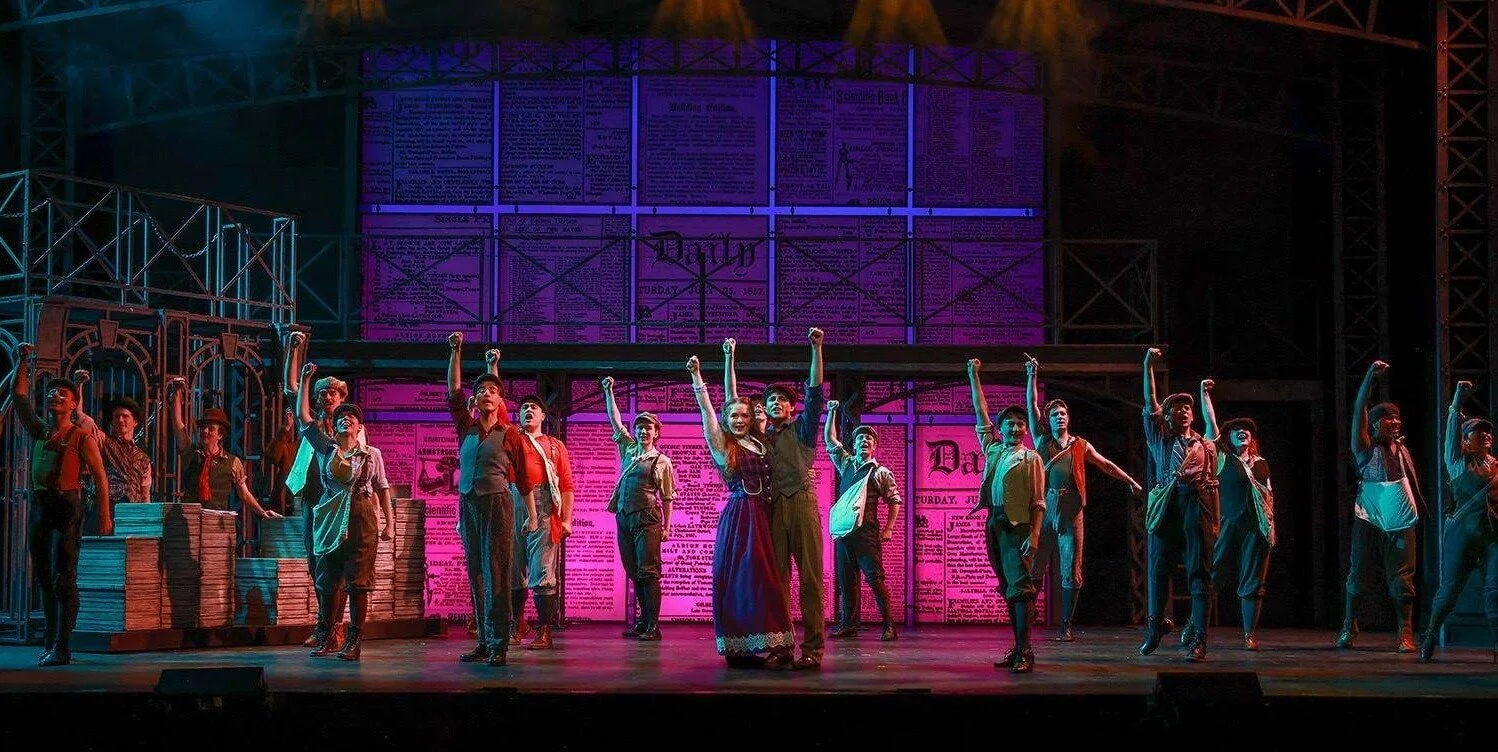
The cast of “Newsies,” the show running currently at Broadway Rose (courtesy Broadway Rose)
Updated 8/19/2026 6:38 PM
It began as a bit of a daydream in the minds of Sharon Maroney and Dan Murphy, a young married couple living in Queens, N.Y., in the early ‘90s.
Parents of a young daughter trying to scratch out a living as actors, the couple decided to go for broke — maybe a poor choice of words — and start a theater operation in Portland, Oregon.
“At the time, I couldn’t even point out Oregon on a map,” Murphy says today.
Thirty-five years later, Tigard’s Broadway Rose Theatre is thriving, providing first-class entertainment with a half-dozen musical productions a year. Under the artistic direction of Maroney, the company presents a variety of main-stage shows through the year as well as summer children’s musicals, educational camps and classes for children and adults and a technical internship program designed for developing theater professionals. A record 49,103 attended Broadway Rose shows in 2025.
Broadway Rose employs 250 full- and part-time and seasonal staff, artists, technicians and educators, with additional support from more than 250 volunteers. There have been many awards, sellout shows and thousands of satisfied customers.
“Broadway Rose has to be one of the greater small-business success stories — theater or otherwise — in the Portland metro area,” says Bliss Talbott, a former Broadway Rose employee and current season ticket-holder. “They are the little theater that could. You know: ‘I think I can, I think I can.’ And boy, have they made it. What they have created for this community and the long-time patrons is immeasurable.”
“It is amazing,” says Harvey Platt, who with wife Sandy serve as title sponsors for Broadway Rose Theatre. “They started with nothing, just an idea and a concept. Today I can easily say that the Broadway Rose is the best (professional) theater in the state, if not the region.”
As a college student, Meredith Gordon began her acting career with Broadway Rose. Now she is completing her third year as the company’s executive director.
“Sometimes I tease Dan and Sharon, like, ‘Thanks for working so hard and making all those sacrifices to build this wonderful community so I can just walk in and say I am the executive director,’ ” Gordon says. “I feel like I have been given a privileged position.
“We are in good financial health. We have a strong community that supports and accepts our work. We are continuing to turn out high-quality productions. My job is to just not mess with it, not worry about fixing something that is not broken.”
During a Broadway Rose fund-raising gala in April, there was a presentation covering the company’s 35 years in existence.
“There were a lot of things I had forgotten, or stowed away,” Murphy says. “I was like, ‘Wow, I remember that. That was hard.’ Because every day we are faced with new challenges in doing a new show, so the product is different, and we want to raise the bar each time we do it.”
Dan and Sharon are proud of what they have built, but they are careful not to get too full of themselves.
“We don’t think about it too much,” Murphy says. “We get so busy doing what we have to do, get up every day and go to work. We are lucky we get to do this and feel very fortunate.”
Murphy pauses, then goes on.
“Really, we look forward more than we do backward.” he says. “Until we have to stop and go, ‘Wow, we can’t believe we were able to accomplish this while raising our two kids. And (the kids) still talk to us. They still come home. They were two of our biggest volunteers, whether they liked it or not.
“It is a great feeling. We are proud of what we are doing. We will take a second, raise a glass and move on to the next show.”
Full disclosure: Broadway Rose, through the Platts, is a sponsor of kerryeggers.com. But I feel qualified to raise a proverbial glass. My wife Stephanie and I have attended Broadway Rose shows for years and will continue. It is always a couple of hours of fun and top-drawer entertainment.
On a wing and a prayer, Dan and Sharon made it happen. Here is their story.
Dan Murphy grew up Larchmont, N.Y., just north of the Bronx in suburban NewYork City. Sharon Maroney was raised in suburban Milwaukee. How in the world did the pair get together for a marriage that has lasted 39 years? (They have two daughters, Megan, 38, and Molly, 33, and a six-year-old grandson by Megan and her husband.)
Both Dan and Sharon were aspiring actors with dance and song abilities. In the early 1980s, Sharon flew to Washington, D.C., for a Southeastern Theater conference, during which each performer had three minutes to audition.
“You sing for a minute, then do a short monologue,” she says.
She was hired by a promoter who owned a group of theaters.
“I drove my Volkswagen bug from Wisconsin, did my first dinner theater and stayed,” Sharon says. “I did show after show after show. It was a great training ground. That’s how I met Danny.”
When Murphy was in high school, he would take the train into Grand Central Station in New York City to take dance and acting classes. At 19, he moved into the city and worked as a page at CBS Studios, all the while continuing to take classes. For three years, he worked on the CBS Morning News show. To make more money, he eventually quit CBS and started waiting tables in Greenwich Village.
Dan and Sharon met in 1984 while both were working a summer-stock production of “Joseph and the Amazing Technicolor Dreamcoat” in Shamokin Dam, Pa., population 1,600 at the time. Says Dan, with some pleasure: “We met in Shamokin Dam, Pa., were married in Wauwatosa, Wisconsin, and live in ‘Tye-guard,’ Oregon, which is a lot for a boy from New York.”
The two were married in 1987 and set up in New York. Four years later, Dan and Sharon, along with fellow performer Matthew Ryan and his partner, Joseph Morkys, decided to move West and establish a summer-stock theater in Oregon.
“Being an actor is a nomadic life,” Murphy says. “One summer when our daughter was four, I was in New Hampshire and Sharon was in Pennsylvania doing summer stock. We were separated for the summer. I realized I had missed a huge growth spurt in our daughter. We decided then that in order to stay together as a family, we would have to create it.”
Ryan had grown up in Tigard. He knew there wasn’t much summer-stock theater happening in the Portland area.
“When you are in New York, you do not have a lot of control over the jobs you are going to get,” Maroney says. “In my heart of hearts, I felt like it was a smart choice in the long run to come to Oregon and start this theater, because we would have more control.”
Says Murphy: “We decided we were going to roll the dice and jump in with two feet.”
The quartet pooled their savings of $21,000 and, in 1991, incorporated Broadway Rose with the state of Oregon as a 501(c)(3) organization. They hired eight seasoned actors and a music director from New York, and everyone flew to Portland to hold local auditions and begin rehearsals for the first season. In the summer of ’92, the season ensued at the Deb Fennell Auditorium at Tigard High. The company produced five main stage shows and a children’s show in eight weeks, with an average of 32 spectators per performance in an auditorium that seats 600. There was a net loss of $8,700 the first season.
“I didn’t realize it would be so hard,” Maroney says. “It was brutal, just brutal.”
After the summer, Dan and Sharon headed back home in a New York state of mind.
“Matthew was staying behind and laying some groundwork for the next summer,” Dan says. “But Sharon and I were thinking, ‘Man, that was hard. How are we going to tell Matthew we don’t want to do it again?’ ”
“I wasn’t going to do it,” Sharon says. “That’s when I discovered I was pregnant (with their second child). It was like, ‘Oh well, let’s go back to Oregon and give the theater another shot.’ ”
Says Dan: “Our thought was, ‘We don’t want to raise the kids in New York. Let’s move to Tigard, and when our younger daughter graduates from high school, we will move back to New York.’ Thirty-four years later, we are still here.”

The Broadway Rose founders made an important connection the first year of operation. The Platts’ teenage daughters (at the time), Jennifer and Melissa, were taking classes at Westside Dance Academy. Several of the girls in those classes, including the Platt kids, were used in a Broadway Rose musical review.
“That was our introduction to Broadway Rose,” Harvey says.
“We didn’t know Harvey and Sandy at all, other than they were parents of two of the kids dancing in the opening number,” Dan says. “The next year, we did ‘Oklahoma!’ and we connected with Joseph Wyatt, who had the Beaverton Dance Center. Their kids were dancing there, so they were in the show again. That is when we started to get to know them.”
With no funding, Broadway Rose put the entire payroll for “Oklahoma!” on Murphy’s credit card.
“I remember calling my dad in New York,” Dan says. “I told him, ‘I don’t have the necessary funding for the payroll for the cast of ‘Oklahoma!’ He said, ‘You better pay them, because (if you don’t), it’s the quickest way to have the downfall of the company.’ I was giving him opportunities to cover the payroll, which he never did. I was too proud and embarrassed to ask.
“I got a cash advance and everybody got paid. But it took a couple of years to pay off that credit card.”
At the end of the second summer, Dan and Sharon realized they had come up short in terms of paying bills. Sharon went to Platt — who at the time, owned and operated Platt Electric Supply — and asked for a loan to cover the end-of-the-year payroll taxes.
“Harvey generously said, ‘I’ll loan you the money,’ ” Dan recalls. “We said we would take the proceeds from opening night the following year (the production was “Fiddler on the Roof”) and pay him back.
“But Harvey said, ‘You are not going to pay me back. You are going to write a check for Cystic Fibrosis.’ So the third year, we wrote a check to Cystic Fibrosis as a payment. It was a win-win-win.”
Platt remembers it a different way.
“I don’t recall it as a loan,” he says. “I said, ‘Keep it.’ (Broadway Rose was) the charity.”
Things slowly began to pick up. Average attendance increased to 132 per show in 1994, and small grants from the Metropolitan Arts Commission helped keep the company alive.
In 1995, Maroney became Broadway Rose’s first paid employee after The Collins Foundation provided a $5,000 grant.
“I was the only administrator for the first six years,” she says. “I was the executive director/artistic director. I took a lot of classes in board development, fund-raising, marketing, etc., so I wore both hats.
“Danny is a taskmaster. Our skill sets are very different. He would write the checks, balance the checkbook, pay bills, all those things. If he hadn’t been in the mix, the company wouldn’t have survived.”
Murphy, meanwhile, was waiting tables in local restaurants.
“I think I served a cocktail to every single person in the Portland area during those years,” he says. “Sharon was home with two young kids, writing grants on an IBM Selectric with correctable type.”
Indeed, through 1997, Broadway Rose’s “administrative office” was in Dan and Sharon’s kitchen. The “box office” was in the garage. They had rented an 800-square-foot house in front of an apartment complex.
“I had my typewriter on a little table,” Sharon says. “I didn’t put it away, because I read in a book that if you are starting a business, you need to write one letter or make one phone call every day.
“I’m telling you, we really started from the ground up, but we were able to do the art part. We were able to learn through the process of running the business and running a non-profit, most importantly. We could always direct and choreograph and put the shows together. We had natural talent there. But when we started the theater, I had directed only one show, ‘Grease.’ Dan had never directed anything. Matthew, the same. I was the artistic director. This is how arbitrary it was when we started. We were just young and it was like, ‘OK, you do this; I’ll do this.’ ”
In 1996, Platt Electric became Broadway Rose’s first title sponsor, a boost to the company’s finances. That same year, however, Ryan and Morkys left the company and moved back to New York.
“That was a really painful moment,” Maroney says. “We thought it was going to impact the business, but it didn’t. Right from the get-go, we never featured stars. Our emphasis was on doing good shows, not contingent on a personality. We were really scared and nervous, but everything fell into place.”
Two years later, the company moved its offices into space in Platt Electric’s Tualatin branch.
“A huge step for us,” Maroney says. “Taking the operation out of our home and into dedicated offices helped us become more professional.”
Platt Electric continued as title sponsor until 2012, when the Platts sold the business.
“Then when the new owners had their own charities, Harvey and Sandy personally remained sponsors and donors,” Murphy says. “And Harvey has been on our board for 30 years as a prominent businessman to guide us. We had the art part down, but not the business side.”
Platt became a financial mentor to Sharon.
“I used to call Harvey and ask him the stupidest questions,” she says. “I didn’t have anybody else (to whom) I could ask those questions. He was so gracious. It takes me awhile to process information. Harvey would ask me specific questions like, ‘What did you gross?’ I would say, ‘I don’t know what that means.’ That’s how inexperienced we were. Then he would explain, and I would get off the phone and figure it out and tell him the information. I am grateful and admire his commitment to watching some artists struggle, struggle, struggle to pull something like (Broadway Rose) together.”
The Platts divide time between homes in Portland and Southern California. He is also on the board of the McCallum Theatre in Palm Desert.
“Sandra and I have always been very supportive of the performing arts,” Harvey says. “They are traditionally underfunded, especially at the grade, middle and high school levels — hugely in some cases. Athletics, especially if the athletes are good, will generally get whatever they want, but that is not the case with theater and music.”
Nobody is more appreciative than Gordon, who has worked closely with Harvey since she took over as executive director.
“Harvey has been instrumental as a sounding board, a business advisor, and he and Sandy have invested personally,” she says. “It is very intentional that we talk about them in our curtain speeches now. Harvey is on our board. He is not afraid to do small tasks, like call donors and thank them for their support, or get tickets for somebody who needs to see a show, as well as sponsoring us very significantly financially.”
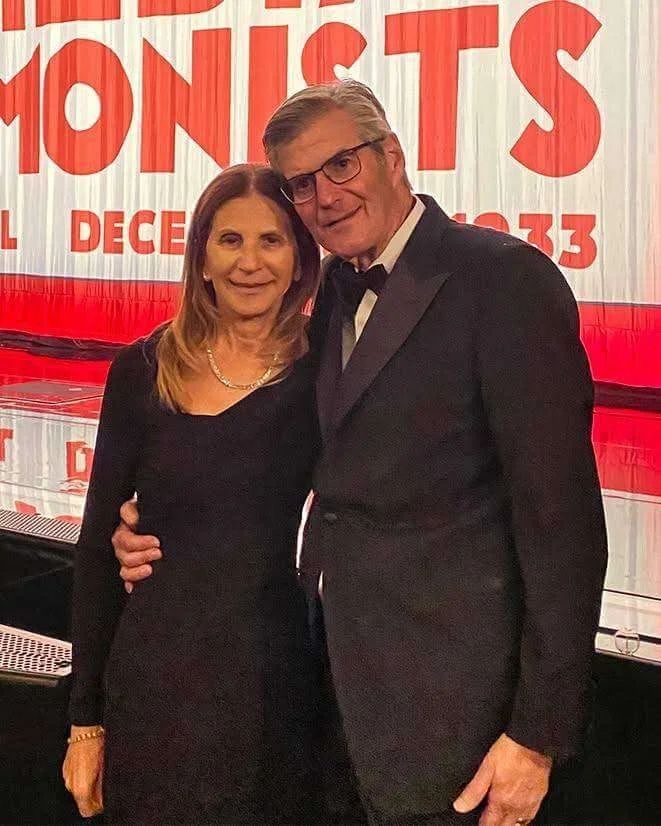
Harvey Platt and wife Sandy have been title sponsors for Broadway Rose for 30 years (courtesy Broadway Rose)
► ◄
In 1999, Murphy finally became a paid employee as his role as general manager became funded.
“Before that,” Dan says with a laugh, “I was the biggest volunteer the place has ever seen.”
Later that year, the Sherwood Arts Council contracted Broadway Rose to produce “Broadway Goes Hollywood,” a fund-raiser that helped Broadway Rose’s annual budget rise to about $175,000.
In 2001, Meyer Memorial Trust awarded Broadway Rose a three-year, $90,000 grant, allowing the company to hire Alan Anderson as marketing director. (He remains in that position and was very helpful to me in writing this story.)
“Alan has been a huge plus for us,” Maroney says. “Danny and I are very different people. There were times when we would fight like cats and dogs. When Alan came on, he was a tie-breaker. When Danny and I didn’t see eye to eye, it would be, ‘Let’s ask Alan.’ He enabled us to continue to move forward.
“(Alan’s hiring) allowed me to get Danny out of the marketing. He was writing coupons to send to our patrons with crayons. He thought it was cute, and I was like, ‘No.’ Alan had worked for other businesses before. He had worked with Jane Fonda, so he was used to working with strong women. That was wonderful.”
Sharon feels a special kinship with the likes of Anderson and Gordon.
“Danny and me and Alan and Meredith, we are all actors,” she says. “When you find somebody with that artistic spirit, with that in their DNA, they are in for the long haul. Alan is part of the fabric of this organization. He is part of the reason we have grown and been successful, because he was willing to put in the hours at modest pay for years and years. We all decided we would rather make lower salaries and be able to do the art and keep the company going than have a year where we make better salaries. We all decided that together.”
Murphy offers plaudits to another valuable employee, production stage manager Jessica Junor, who has been with Broadway Rose since 2010.
“Before she came along, I would have to be the first one to open the doors and the last one to close them,” he says. “I don’t have to be there for 24 hours a day anymore. Alan and Jessica are our longest employees and two of the best. Now I feel at 35 years, we have all the right people in place.”
The year 2001 was special for another reason. On July 8, “Phantom” became the first sellout in Broadway Rose history — with nearly all of the remaining performances selling out, too. The show won two Drammy Awards, and ticket sales for the year increased 60 percent from the previous year.
That represented a turning point for the company.
Says Murphy: “We said, ‘OK, we think we are on our way.’ It picked us up artistically. We were gaining a reputation at that point. It took us about 10 years to where we finally thought, ‘We are getting this.’ ”
By this time, dreams of putting on year-round musicals at Broadway Rose began to come to fruition.
“We were summer only,” Murphy says, “and then we would go away. We wanted to go year-round so audiences would be used to seeing us year-round.” And more shows, of course, would contribute to the company coffers.
In 2001, a holiday show at Tigard High was added to the schedule, and in 2002 it began a cabaret series in a Tigard church, with one-night-only series taking place in late winter and early spring. The series continued through 2008.
In 2004, Sharon and Dan were on stage together for the first time at Broadway Rose, acting in “They’re Playing Our Song.”
In 2007, the Tigard-Tualatin School District board approved Broadway Rose’s proposal to convert an abandoned elementary school cafeteria building into a theater with permanent office spaces. In February 2008, a groundbreaking ceremony took place, and the Collins Foundation provided a $124,000 grant to help with the capital campaign. In November began the first non-summer show, “Celebrate Home — A Broadway Rose Christmas.” The next year came the first year-round season of six MainStage musicals. The company was honored in Oregon Business Magazine’s inaugural “100 Best Nonprofits to Work for in Oregon” and was selected as “Business of the Year” by the Tigard Chamber of Commerce.
Things continued to progress. In 2013, the Andrew Lloyd Webber classic “Cats” set a new Broadway Rose ticket sales record. Two years later, a six-week run of “Grease” broke that record. In 2016, the 25th anniversary year, the spring production of “Church Basement Ladies” sold out 25 of its 26 performances. Dan was selected as the Tigard Chamber of Commerce’s first citizen. But that year, while starring as Pseudolus in “A Funny Thing Happened on the Way to the Forum,” he became seriously ill and was hospitalized with acute pancreatitis, unable to perform or to continue his GM duties. Alan Anderson stepped into the role of Pseudolus and the show went on. The 2018 production of “Mamma Mia” broke previous box office records with more than 12,000 tickets sold.
In March 2020, Covid brought live performances to a halt. The company launched online content, releasing its first recorded production, “Daddy Long Legs,” which streamed for three weeks.
Live performances resurfaced through the second half of 2021, and the last show that required proof of vaccination was “Don’t Hug Me” in April 2022. In June of that year, the grand opening for the expanded New Stage took place, the result of a $3.4 million project. That year, Broadway Rose presented seven productions to live, in-person audiences for the first time since the pandemic.
In 2023, Broadway Rose held its summer show in the Deb Fennell Auditorium at Tigard High for the first time since 2018. The next year, “Beautiful: The Carole King Musical” drew the highest number of first-time ticket-buyers in the theatre’s history, becoming its second-best-selling show ever.
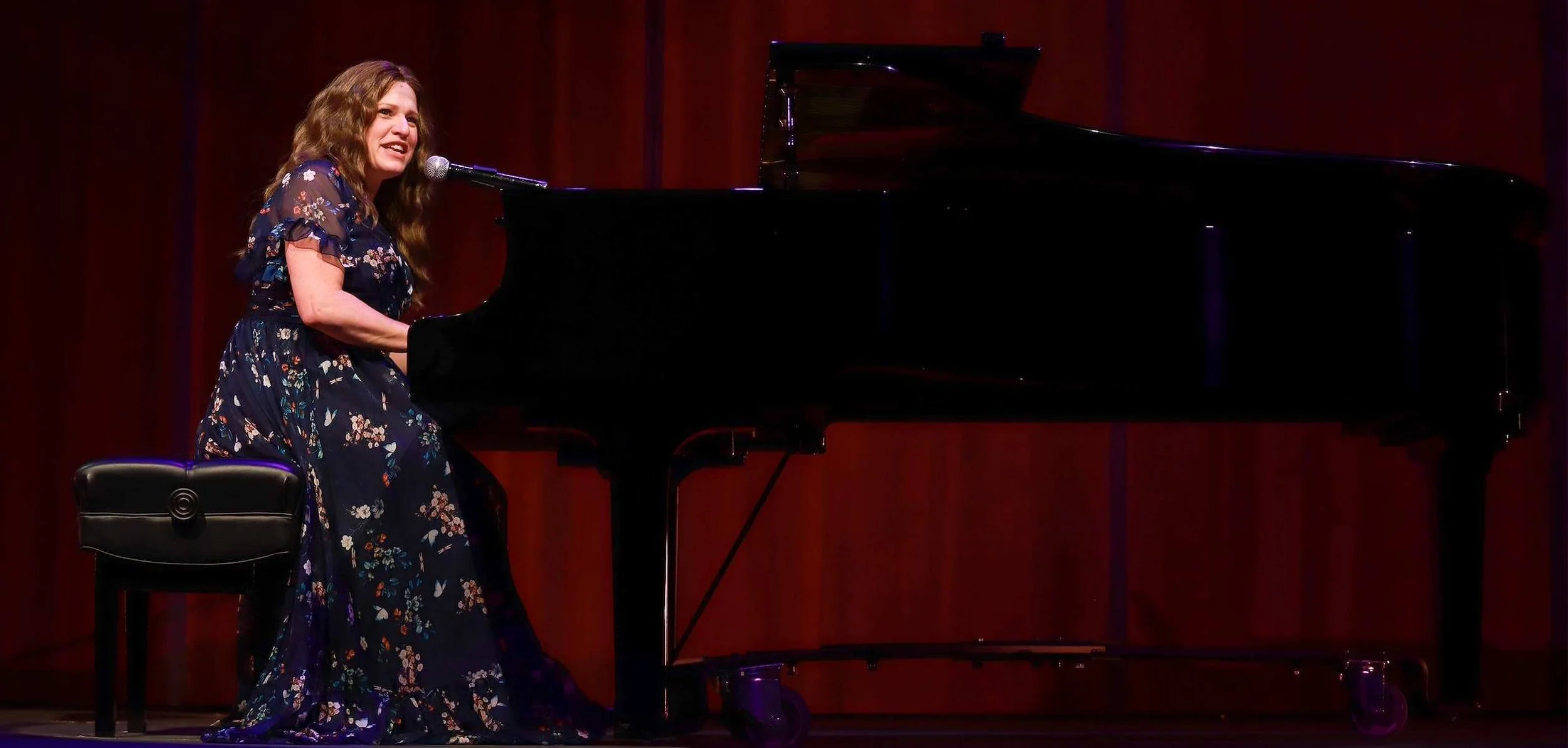
Merideth Kaye Clark played the lead in “Beautiful: The Carole King Musical” in 2024 (courtesy Broadway Rose)
This season has been one of Broadway Rose’s finest as it celebrates its 35th anniversary. In March, it hosted a spring conference for the National Alliance for Musical Theatre, featuring keynote speakers from throughout the nation.
Through its 35 years, Broadway Rose has produced five non-musicals, the most recent one in 2009.
“The feedback we got from our audience was, ‘Please don’t do those. There are other places that do plays; we love musicals, and you guys do them the best,’ ” Murphy says.
“Musicals are so much more expensive to produce,” he elaborates. “You have live music, a musical director. We said, ‘We are going to keep producing musicals as long as we can. That was the impetus for why we started.”
The reason for the five non-musicals was simple, Murphy says.
“We needed a break from having such huge costs,” he says. “When we did ‘Mamma Mia!’ in 2018, it was our best-selling show to date, but the royalties for permission to do it were $75,000. We try to keep prices low, but that production cost more than $300,000 to produce.”
Two years ago, “Beautiful: The Carole King Musical” had a production bill of $400,000.
“People don’t realize how much it costs, nor should they,” Murphy says. “They should just buy their tickets, sit back, relax and enjoy the show. That is all we want from them. If they have a little extra to round up, we are happy about that, too.”
Former employee Bliss Talbott gives Murphy high marks for his thriftiness with Broadway Rose financial books.
“Dan runs a lean operation, a fiscally responsible, tight machine, and that has helped keep them afloat,” she says.
Talbott calls Dan and Sharon “the hardest-working people you will ever meet.”
“Dan gets to the theater at 8 in the morning and stays until 11 at night after a show is over,” she says.” He looks at himself as the ‘chief cook and bottle washer,’ but that’s no joke. He has done everything, including cleaning toilets. He does whatever it takes to make that theater a success. “Dan and Sharon realized to be successful they had to make meaningful connections in the community. Dan spent time with the chamber of commerce, the Rotary, Tigard/Tualatin School District. Dan has performed weddings. He sings at birthday parties. He attends funerals.
“They realized they needed people to look at the Broadway Rose as an important part of their lives, not just a place where they go to see musicals. They have made this little theater a part of people’s lives. That is what they have created.”
► ◄
When I ask Sharon at what point she thought the company was over the hump financially, she demurs completely.
“I never feel that way, ever, still to this day,” she says. “Running a nonprofit, there are so many variables that can knock your foundation under. The recession in 2008, that was tricky. When we went year-round was a very complex time. We had never had all those bills before. There have been so many challenges.
“The hardest transition was going from a completely volunteer organization to trying to get paid staff. There was a tough transition going from summer to a year-round theater. The 2008 recession hurt. Then the pandemic was brutal. You never get to rest on your laurels in this type of business. You never know if a show is going to sell or not.”
Dan strikes a slightly different chord.
“I felt we had made it maybe when we (achieved) our first sellout, with ‘Phantom' in 2001,” he says. “We started filling up in the summertime, and then we went year-round. We have been operating in the black for many years. Not many arts organizations can say that. We have been good about squirreling away money when we can and keeping our expenses down.
“It helps that we have maintained a wonderful relationship with the Tigard/Tualatin School Board. They have always been good stewards of public buildings, very community-based for arts and sports and all sorts of stuff. We pay $1 a year rent for the New Stage building we’re in, because we maintain it and do things for the community and school district.”
Sharon says that even artistically, “I don’t feel that confidence. Maybe it’s in my wiring.”
But when I ask about favorite shows, Sharon has many positive thoughts.
“Every show has so many different elements,” she begins. “You just can’t compare. We had tremendous success with ‘Mamma Mia!’ Phantom fever was like a defining moment for us. We were shocked. Oh my gosh, we can produce a show that can sell out.
“You could also say ‘Les Miserables’ was a defining moment. I said, ‘We are going to lose money on this, but we need to do this show now so more people find us so when we go year-round, they are aware of who we are.’ It was such a unique opportunity for the actors in town. Everybody came out of the woodwork because they wanted to be in it.
“I was also really proud of ‘Will Rogers Follies.’ That was right after 9/11. A lot of things went sideways, but we pulled it off and I thought it was brilliant.“
I would like to do ‘Ragtime.’ I have been waiting 30 years to do it, but it is a complex piece to do, and we would have to bring so many actors in from out of town. I have to wait until the timing is right. I waited years to do ‘Ain’t Misbehavin’.’ I am guessing some artistic directors walk into an organization and just start producing their passionate pieces. But I was the only fund-raiser for the Broadway Rose for many years, so I am very cautious about the shows that we choose. We are a $3.6 million organization, but we still have to raise over $1 million (in ticket sales) every year.”
Murphy lists a few of his favorite shows.
“One of them I got to be in was called ‘The Drowsy Chaperone’ in 2012, ” he says. “It won Drammy Awards. I got to play ‘Man in Chair.’ It’s wacky, one of my favorite shows. I had the good fortune to play ‘Edna’ in ‘Hairspray.’ One of my all-time favorites was ‘Hello Dolly.’ I wasn’t in it, but Sharon played ‘Dolly,’ and I directed it. That is almost the perfect musical.”
Dan explains Broadway Rose’s philosophy for scheduling shows.
“We strategically try to do a menu of options for people,” he says. “I like it when we find some off-the-beaten-path musicals that people have never heard of, but come anyway. I love to find the intimate shows, especially now that we work out of two theaters and our smaller theater lends itself to that.
“We find them because we are part of the National Alliance of Musical Theater. We go to New York, where we are immersed in this national community. When we bring stuff back here, the audience goes on faith that they are going to like it. Do we have the magic formula that everybody likes everything we do? No, but we produce musicals at a level where people go, ‘Even if this particular one isn’t my cup of tea,’ they buy season tickets and have faith it is going to be of high quality. But I feel like with every show we do, we take a chance.”
Meredith Gordon looks at what Dan and Sharon have accomplished through Broadway Rose-colored glasses.
“They were naive,” the company’s executive director says. “I say that with love. If they had known what a daunting venture they were getting into … anybody with a full understanding of just how big it is to start a non-profit and build a theater, they might not have done it. But they were young and had a lot of energy and incredible work ethics. They did everything they needed to do to get the work done.
“Because they are honest and reliable, they were able to build trust in the community, and they learned the skills they didn’t have to figure out the things they didn’t know. Sharon took grant-writing courses. They learned how to direct shows. They figured out the entrepreneurial skill set that not all of us have. That is what got them through the first really hard years. Over time, they planted roots and built relationships that help them grow the staff, the volunteer network and the donor network so it can sustain long past their time here.”
► ◄
What is it that makes Broadway Rose Theatre so special?
Gerry and Joann Reese have been season ticket-holders since 2003.
“We love the quality of the performance,” Joann says. “The main stage has that intimate feeling. We feel very comfortable there. One of the things we like is (Broadway Rose employees) get to know us as patrons. They see a familiar face, they make a point to say hello, and we respond. Over the course of time, that relationship with patron supporters builds.”
The Reeses have introduced many friends to Broadway Rose. Every year, they get together with a group that goes to dinner, then attends a show.
“The group was originally all neighbors,” Joann says. “Some of them have moved on. It started out as a chance to share the Broadway Rose, because most of them didn’t go to the theater. When the group started to dwindle and move away, we thought it would be a great way to bring back the former neighbors and catch up with them. We have 14 seats reserved (together) for ‘Million Dollar Quartet.’ ”
Susan Cochran has been a subscriber since 2013 and volunteers “for all the shows in any capacity that they need me, including the New Stage shows and the kids’ performances,” she says.
“The community that they create with all of their patrons is what makes them special,” Cochran says. “You walk in the door and everyone feels special. They are happy to see you, friendly and so accommodating. They want people to come out and see their shows and love having everyone there. They put on the most amazing performances — the music, the choreography, the writing. It is the highest quality. It is just fabulous.”
Cochran is a member of the Theatre Guild, a group founded in 2005 that supports Broadway Rose in many ways. It helps raise money to support the company’s teen summer camp.
“About 40 teenagers put on a musical,” she says. “Last year, they did ‘Les Miserables.’ I also support Broadway Across America when it comes to Portland, and (the Broadway Rose) teen performance was right up there with any Broadway Across America performance I have ever seen.”
Many out-of-state actors converge on the Portland area for Broadway Rose presentations.
“We do a gift basket for each of them with all things Oregon — Oregon chocolates, gift cards to a lunch place or coffee shop while they are rehearsing, for instance,” Cochran says. “The Guild is a wonderful group of about 30 people. I joined last year and love it. I feel a part of something very special.”
For 11 years, Bliss Talbott worked as Broadway Rose’s front-of-house manager. Now, she is an appreciative season ticket-holder and a volunteer “multiple times a show.”
“I go to all of their galas,” she says. “I am a donor and am whole-heartedly supportive of this theater. I see all of their shows. It is a remarkable thing.”
Talbott has many thoughts to add about her favorite theater.
“What I love about the Broadway Rose is the emphasis on not being afraid to produce new works,” Talbott says. “They have the trust of patrons who are willing to come in and see things that they normally wouldn’t see. I love that they are willing to take a chance, but they always keep their patrons in mind.
“That is one thing that Broadway Rose did really well during the pandemic. A lot of theaters were changing up their programming to be a little more diverse or woke and got themselves in trouble because of it. Broadway Rose stuck to its core mission of producing theater that was going to be accessible to everyone, where everyone was welcome and felt comfortable, where you could come to the theater without feeling like you were being lectured to. And look where they are. They have sold-out shows as far as the eye can see. It is a feel-good experience for people.
“I am so happy and thrilled and pleased that this theater is getting the recognition that it more than deserves. Dan and Sharon have worked for every moment of this.”
Pattianne Carmical is a regular at Broadway Rose productions and volunteers “at least twice for every show, sometimes more.”
“(Broadway Rose employees) meet with all the volunteers before the show starts,” she says. “They tell us we are the first people that the patrons see and we need to be upbeat, so when you walk in the lobby everyone feels welcome there. It is a very inviting place when you first arrive, and the shows are first class. They find the best actors. They have gotten better every year.”
Carmical has gotten to know many of the company’s top employees.
“Dan is the life of the party,” she says. “Funniest person I have ever met. He talks to everybody. When he is in the lobby, everyone wants to go talk to Dan. He is a fabulous actor. People love him.
“I never realized how talented Sharon is until we went to dinner. She is a first-class artistic director. She notices little things that nobody else would notice. She is the biggest reason why Broadway Rose shows are over the top. She is so professional. She is very quiet, unlike Dan, but she is so talented.
“Meredith is darling. People are going to love her. They do love her. She is full of energy. Alan Anderson is so professional, too. With all of them, this is their passion. They love it. It is not just about the performances but behind the scenes that make it what it is.
“After a show, I like to go and talk to some of the actors. They bring them in from all over. One girl was from Florida and she told me, ‘Oh, we love coming here. They treat us so well.’ They love working for Broadway Rose Theatre. That says a lot.”
Harvey Platt also sends special kudos Sharon Maroney’s way.
“Artistically, she knows a star when she sees one, and she knows a singer when she sees one,” he says. “She has been really good at recruiting talent from New York and all over the country. Musicals take so much patience and skill to put together. There is so much that goes on with the sets and the costumes. The average person has no idea all that goes into it. She is the one who has made that happen.”
► ◄
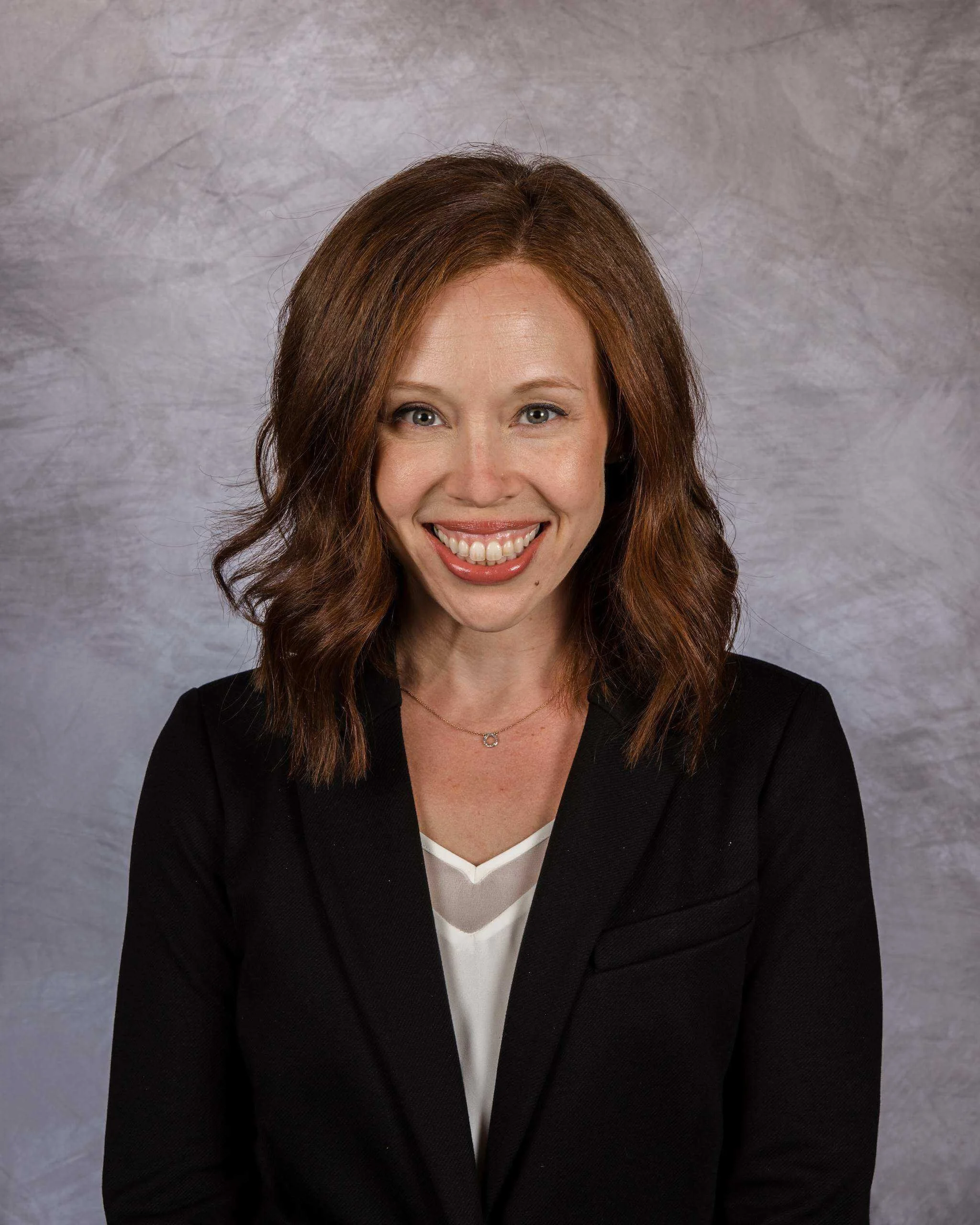
Meredith Gordon is in her third year as executive director of Broadway Rose (courtesy Broadway Rose)
Meredith Gordon was 19 and had just finished her freshman year at the University of Northern Colorado when she began her acting career at Broadway Rose. She played “Jack” in “Jack and the Beanstalk.”
“It was my first paid acting role,” Gordon says. “We did ‘Jack and the Beanstalk’ this summer, too. The running joke was that I was going to be the understudy.”
In the ensuing years, Meredith performed in two more Broadway Rose productions. When she was hired as executive director in October 2023, “It was a full-circle moment for me,” she says. “I had a fondness in my heart from those experiences.”
After graduation, Gordon stopped performing, pursued a career in non-profit development, got married and had kids.
“But I always had an eye on Broadway Rose,” she says. “How are they raising money? How are they raising their brand? I was always impressed with what they did. Over the years, Sharon, Dan and my paths would cross, and it always felt like coming home. Because there is something about people who knew you at a vulnerable time, when you are young and impressionable and trying to figure out who you are.”
In 2023, Sharon asked Meredith to breakfast. It wasn’t an audition, but Sharon was looking to hire someone for a key position in the company.
“Meredith had worked for us as an actress,” she says. “She had worked for non-profits, and she had fund-raising experience. That is a unique combination to find. I had my eyes on her. I am an intuitive person, and I felt like she would be a good match for this organization.”
“I don’t know that Sharon had a clear ‘ask’ in mind,” Meredith says. “I think she was just interested in what I was doing. I was finishing up my masters in business from Willamette. I didn’t have a clear plan in that, either, other than I enjoyed working in the nonprofit sector. Getting an MBA seemed like a solid way to tie things together. We were just talking it through, and it dawned on us that this connected all of the dots.”
Shortly thereafter, Gordon was Broadway Rose’s newest employee.
“Bringing me in well before they were ready to retire allowed time for me to establish trust with this community,” she says. “I had stopped performing in 2012, so I had been out of the theater for a long time. The things you discover when you are young stay with you in a different way. So this was a full-circle moment in taking my career path, which had gone in a different way, and looping it back to make it all make sense.”
Gordon’s duties are considerable. She is in charge of administrative and financial oversight in addition to fundraising and serving as the point of contact for the board of directors.
“I report to them, but they are also my people who I ask advice of,” she says. “I am at the top, making decisions alongside Dan and Sharon. It is really important in my role to help nurture the culture in the company, identifying where are the kinks in the system, establishing performance reviews and working through a lot of personnel and human resources decision-making.
“It is also making sure we are on track, that expenses are not exceeding our revenue, that we are doing things in a transparent way with the board, and to foster a good reputation in the community. I am taking some of that stuff off of Dan and Sharon’s plate, where they have been going and going for so many years. I am continuing to learn every day. My biggest hope is they will continue to let me grow.”
No problem with that, Sharon says.
“We have had various people in the position in the past and it didn’t work out as well,” she says. “Since Meredith has been in her position, it has been a home run at every level. She was talking recently about how her kids love coming to the theater. She has discovered working for the Broadway Rose has been wonderful for her family. That is good in the long run, too.”
Though Dan and Sharon cast a long shadow, “Meredith is making it her own,” Dan says. “She is fostering her own relationships. It is a huge relief to both of us that Meredith is here. It is going to be different when the founders leave, but we feel it is in really good hands with Meredith at the helm.”
► ◄
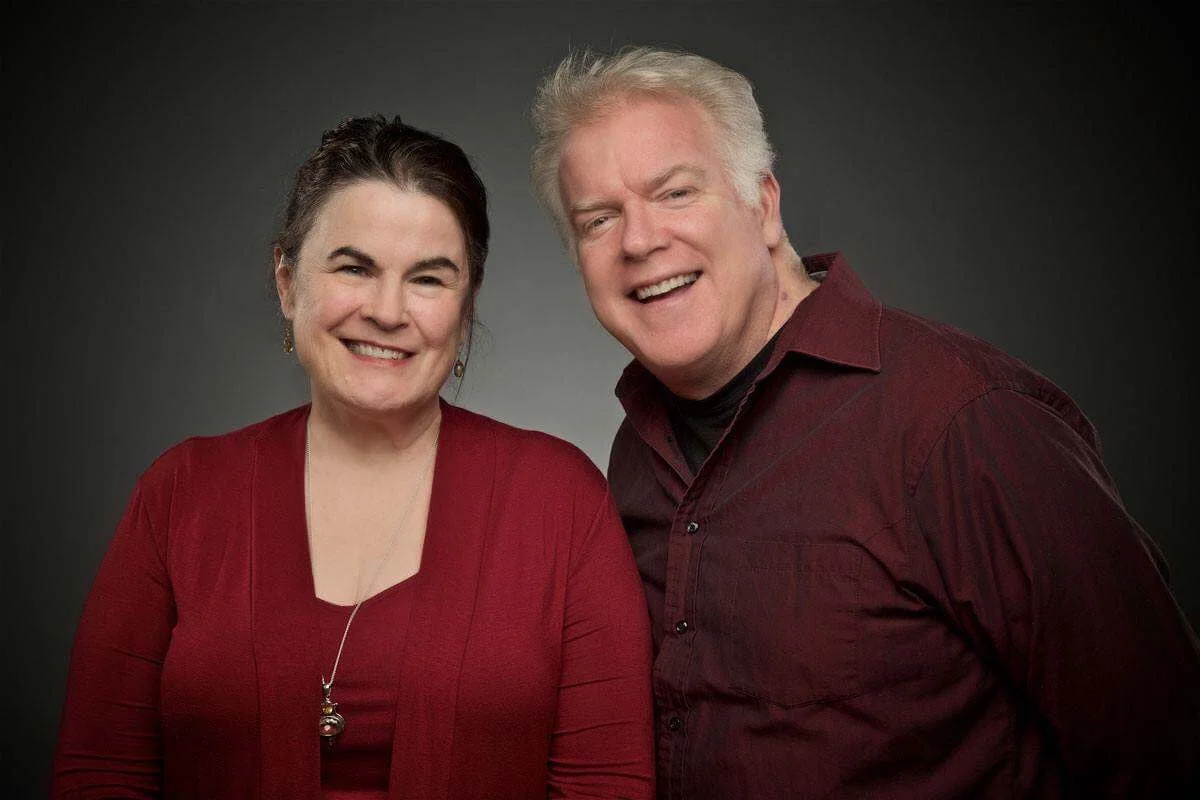
Sharon Maroney and Dan Murphy started Broadway Rose Theatre in 1991 and continue to run the company (courtesy Broadway Rose)
Dan, 65, will be leaving first. He is retiring from his position as managing director on Dec. 31. He will essentially be replaced by Madison Conrad, who has been with the company for four years and is currently operations manager. Her title will be general manager.
“I have been mentoring Madison along,” Dan says. “Some of my duties will go to Meredith as executive director. Madison will handle the rest of the day-to-day operations. Meredith will be in charge of the admin parts; Sharon will be in charge of the artistic parts.“
I am directing the first two shows of our upcoming (2027) season and will remain a board member as part of my strategic exit plan. I am interested in directing and performing other places as well. I am an old guy, but I can still sing and kick up my heels. I am going to give it a shot. We have rolled the dice all our lives. No reason to stop now.”
At one point, Sharon, 68, thought she might be retiring first.
“Then I started having anxiety attacks,” she says. “I went through my diaries. And I said, ‘No Danny, you are the one who needs to retire, not me.’ So we switched it.”
Sharon will continue as producing artistic director.
“My job is very different than Danny’s,” she says. “He wants to be an actor. I don’t. I will do stuff for the Broadway Rose, because it is my pet project, but I won’t do that for other (theater companies).
“Now that Meredith is in, my job has been cut basically in half. I can focus on the art part of the shows with my eyes closed. It is so easy. I have been doing it for so many years. I have to start keeping my eyes open for my replacement, but I still love what I am doing.”
Meredith seems firmly planted as the future of the company.
“She will be great,” Platt says. “She has the right spirit and attitude and intelligence to bring the Broadway Rose into the next generation. As far as running the theater, the day-to-day operation, the financial part, Meredith has everything she needs.”
► ◄
Readers: what are your thoughts? I would love to hear them in the comments below. On the comments entry screen, only your name is required, your email address and website are optional, and may be left blank.
Follow me on BlueSky.
Follow me on X (formerly Twitter).
Like me on Facebook.
Find me on Instagram.
